CUSTOM APP OR OFF-THE-SHELF SOFTWARE?
A ready-made system can be an expensive way to work around somebody else's process. A custom app can be an expensive way to rebuild something you could already buy.
The decision starts with the job. Work out what the business needs to do, where the existing process wastes effort and which requirements make it different. Then compare buying, configuring and building on the same evidence.
Buy the standard work when the fit is good
A packaged product can give the business a working starting point and a supplier responsible for maintaining that product. When its workflow matches the job, configuration and training may be more sensible than commissioning equivalent features.
It is still a project. Importing data, agreeing access and changing habits can take real effort. Check the actual edition and license scope. A product demonstration is a poor guide to cost if the demonstrated feature sits in another plan.
GOV.UK's commercial-software guidance recommends understanding the problem and testing options before commitment. It applies to public services, but its emphasis on fit and evidence is useful beyond government.
Do not reject an existing product simply because one screen differs from the current spreadsheet. Some differences improve the process. Distinguish a necessary operational requirement from a habit the team could change without harming the work.
Build around a difference that matters
Custom development deserves attention when available software fails at something essential: a specialized workflow, a required device interaction or a connection that the operation depends on. Describe the requirement and the cost of working around it.
Ownership can offer flexibility, but responsibility follows it. Someone must maintain the code or design, support users, handle updates and restore service after a failure. A small company does not escape those jobs by owning the application.
Prototype the hardest requirement before approving the complete build. If the difficult part is an offline approval process, prove that process with realistic data. A polished customer-list screen will not settle it.
| Route | Useful when | Main question |
|---|---|---|
| Buy and configure | An existing product fits most essential work. | What does the correct edition cost to operate? |
| Build a custom app | An important requirement lacks a suitable product. | Who owns delivery, maintenance and recovery? |
| Extend an existing system | The core product works but one workflow does not. | Can the extension use supported interfaces without duplicating ownership? |
| Simplify the process | The apparent requirement comes from avoidable administration. | Can the business remove the work before automating it? |
The missing piece may be smaller than the replacement
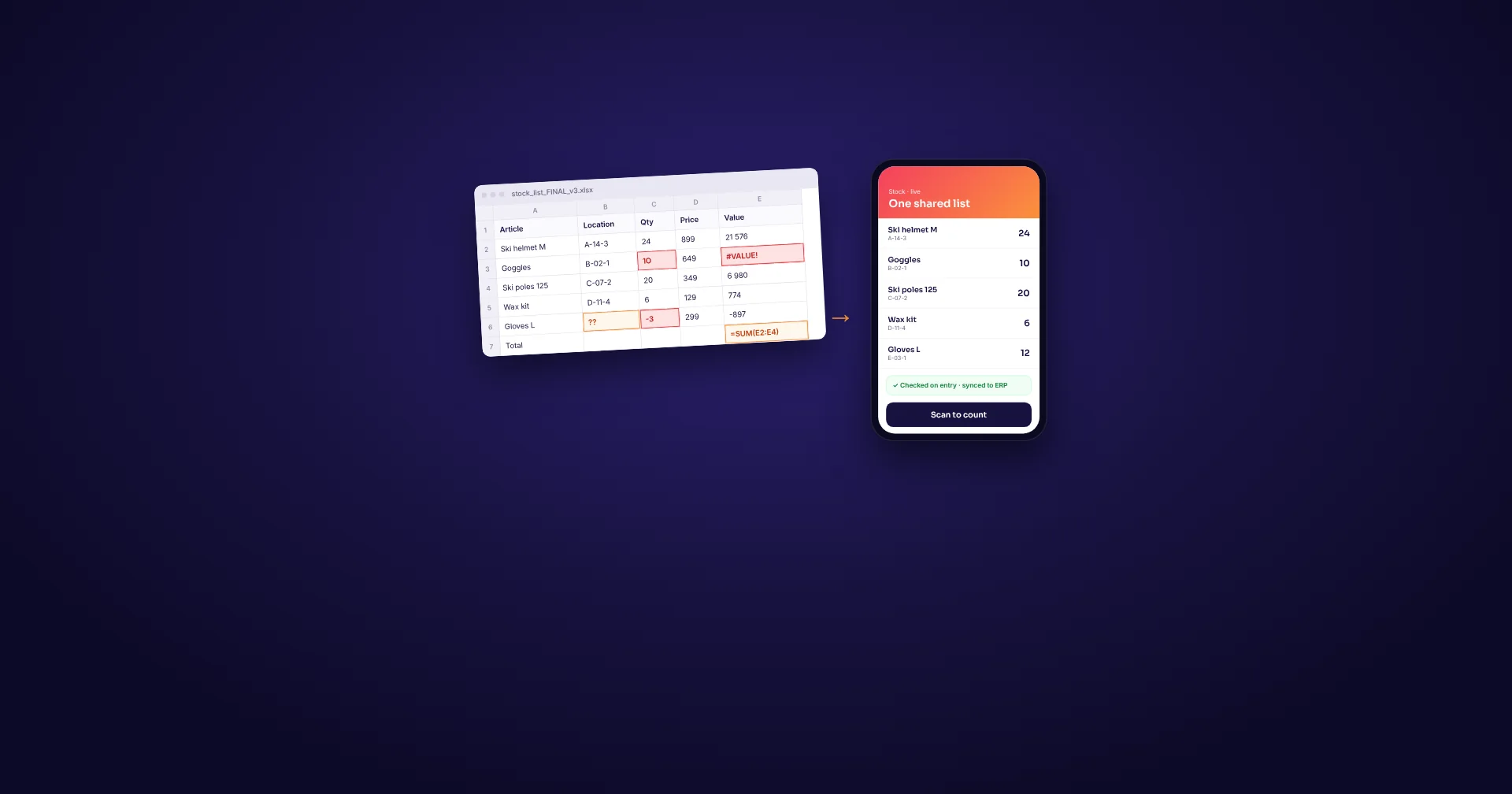
A company may want to keep its accounting or stock system while improving the way staff collect information. A focused app can handle that part and send agreed data back. This can reduce the amount that must be rebuilt, provided both systems have clear responsibilities.
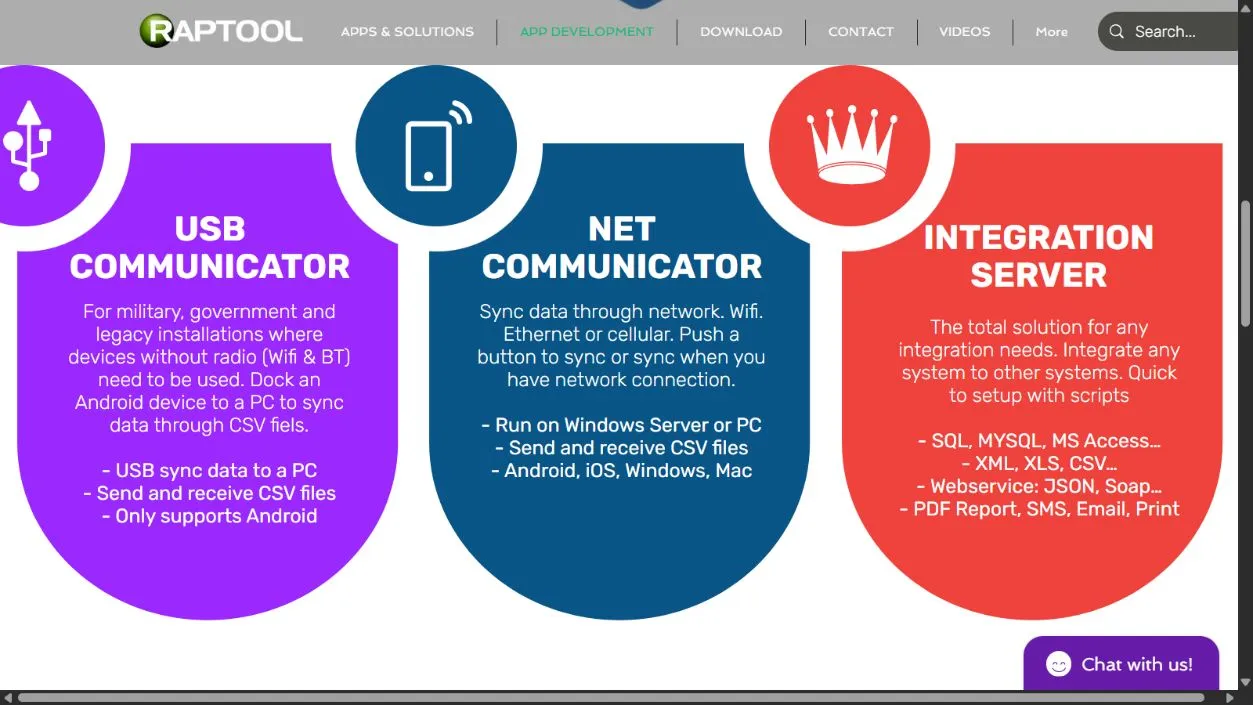
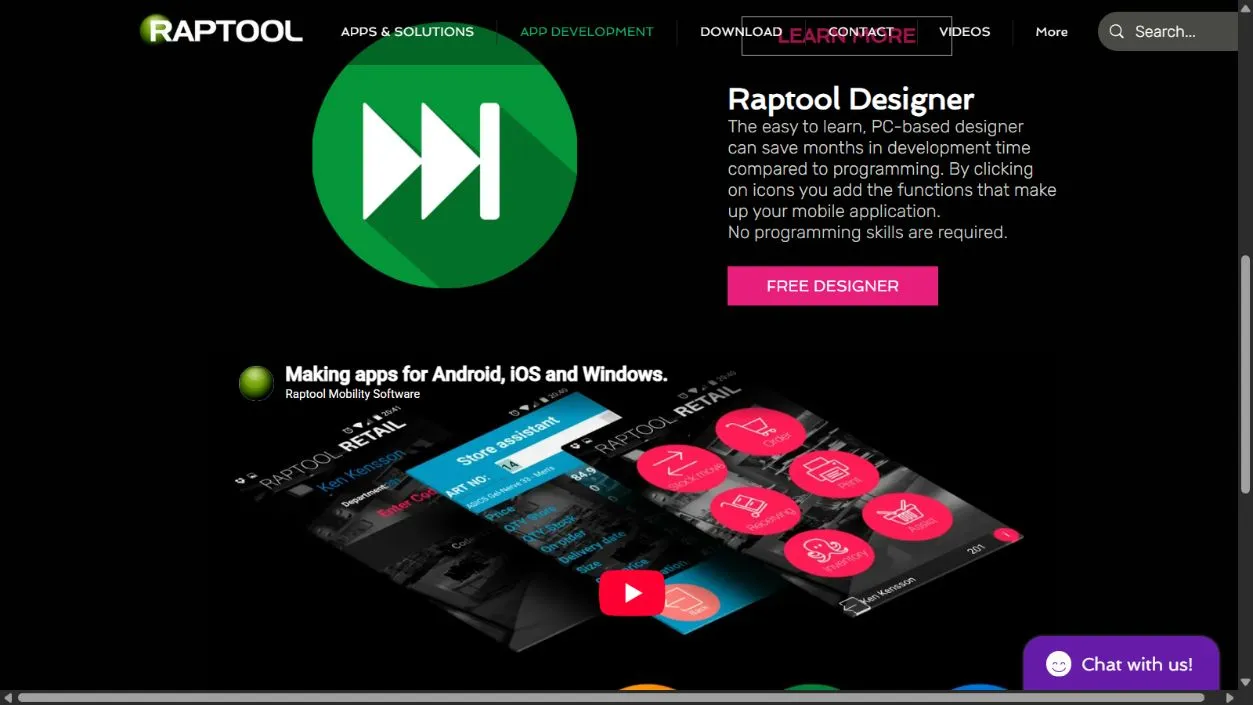
Raptool's product overview describes design, runtime, integration and storage components. It is one approach to investigate for a business workflow around an existing system. The published material does not prove that your specific connection is already available.
Check the connection in both directions. Agree which system owns a customer, an order or a stock quantity, and how errors are reconciled. An extension that creates a second master record can multiply the administration it was meant to remove.
Use the same time horizon for both quotes
Compare setup, licenses, configuration, integration, migration, support, maintenance and change over an agreed period. Include internal effort. A low first invoice can hide a costly renewal or a manual workaround that repeats every day.
The cheaper first year may not be the cheaper route
Assume a packaged option costs €4,000 to set up and €8,000 annually to run: €4,000 + 3 × €8,000 = €28,000.
Assume a custom route costs €16,000 to deliver and €3,000 annually to operate and maintain: €25,000 over three years. A €6,000 omitted integration would raise that route to €31,000. Compare equivalent scope; these assumptions establish no general winner.
Also assess time to usable operation and the cost of a missed requirement. Keep uncertain benefits out of the guaranteed-saving column. If a proposal relies on extra sales, identify who owns that assumption and how the business will measure it.
Ask how you will change your mind
GOV.UK's technology-selection guidance highlights adaptability, control of data and total ownership cost. Those questions apply to both a vendor platform and a bespoke codebase.
Test an export with the relationships and attachments the business needs. Confirm access to source or design files where appropriate, runtime dependencies, supplier support and the handover if the original developer leaves. An application can be custom-built and still depend heavily on one person or platform.
Choose a package when it fits and its total cost makes sense. Commission custom work when a justified difference earns the ongoing responsibility. Use a combined approach when the missing part is small enough to solve without replacing the whole operation.
Questions behind the decision
Should a small business build or buy its software?
Buy when an existing product fits at a sensible total cost. Build when a justified requirement earns the responsibility of custom software. An extension around an existing system may be enough.
Is custom software always independent of a supplier?
No. A custom app can depend on a vendor runtime, hosting, frameworks or an individual maintainer. Test the handover and exit options.
What belongs in a build-versus-buy calculation?
Compare equivalent setup, licenses, integration, migration, support, maintenance and internal effort over the same period. Keep uncertain benefits clearly labelled.
Sources and scope
Research checked October 2026. Sources are linked beside factual claims. Worked scenarios are illustrative, not customer results or supplier quotes. Screenshots show published platform material; device photos are catalog references, not compatibility certification.