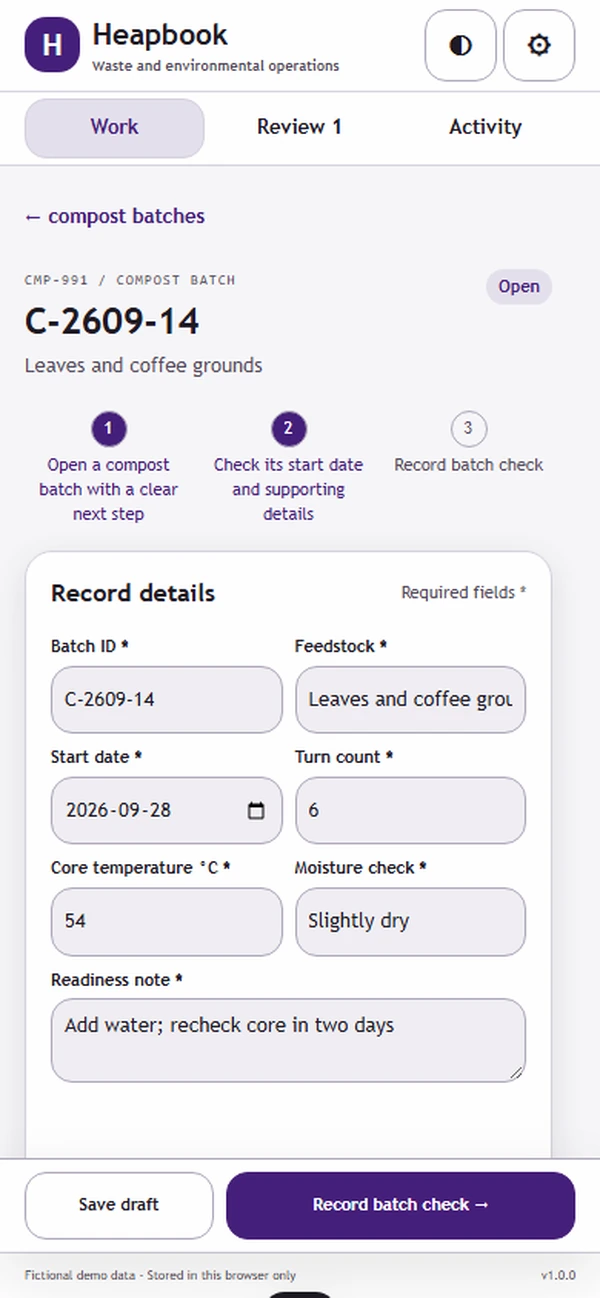
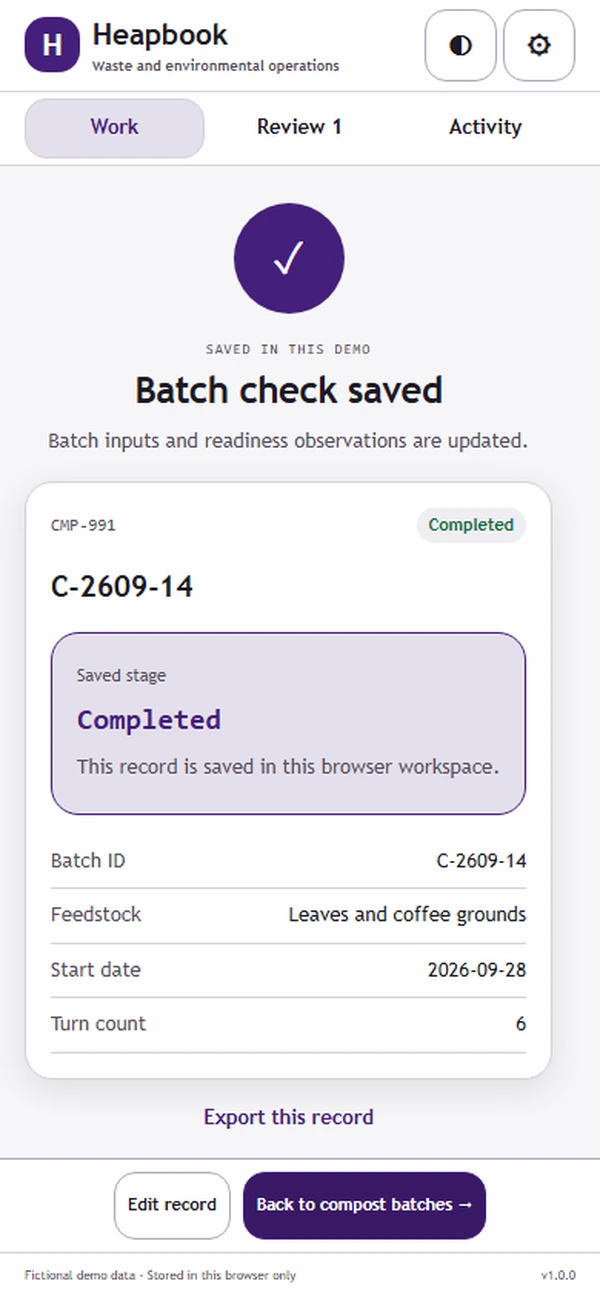
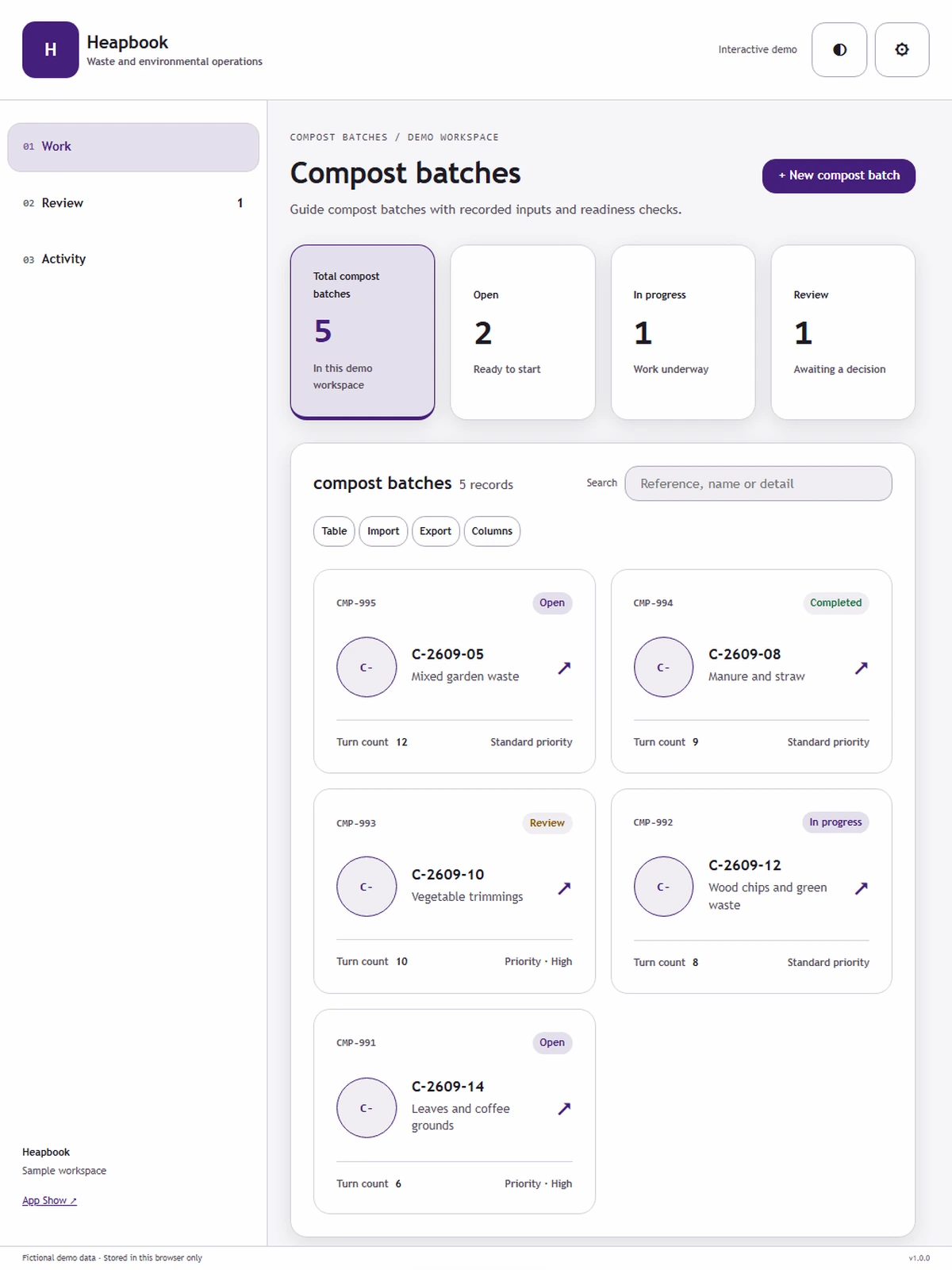
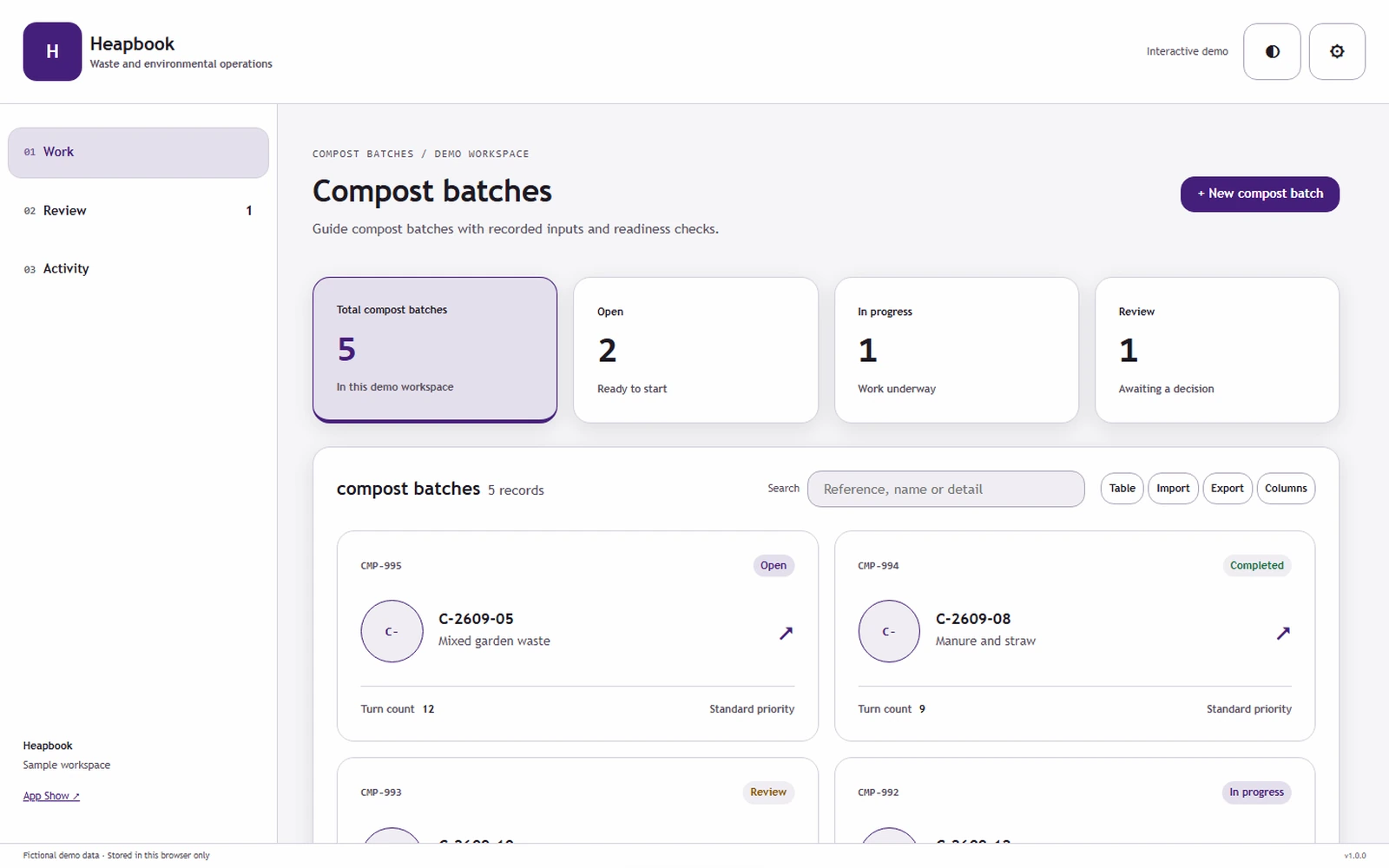
Guide compost batches with recorded inputs and readiness checks.
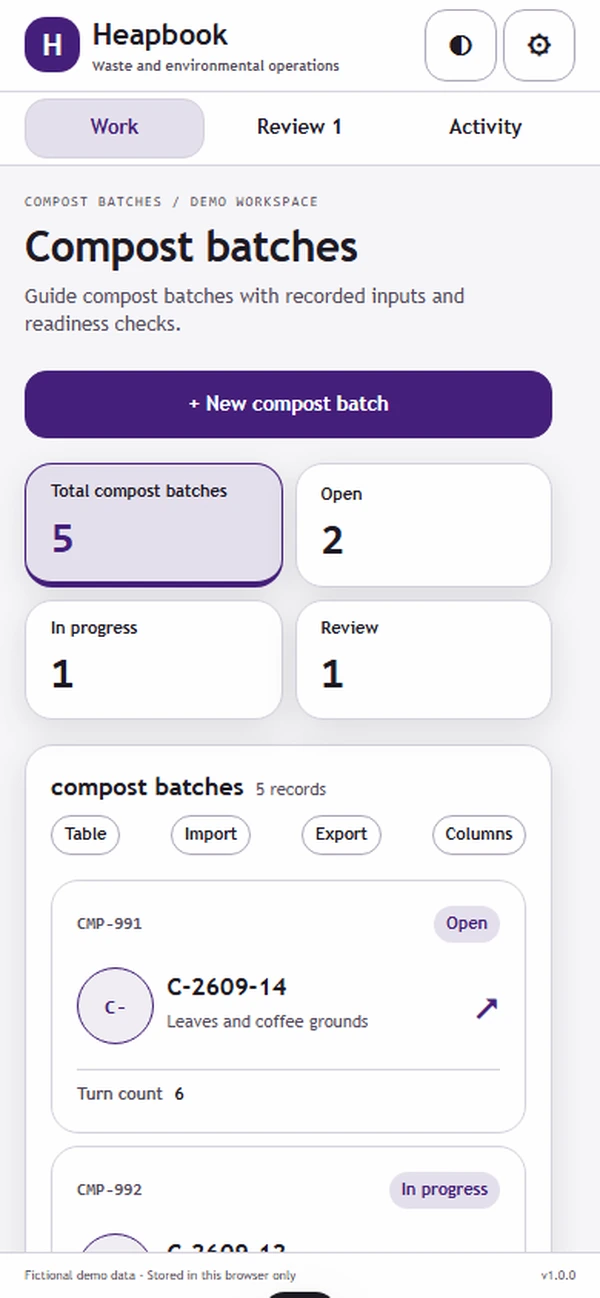
Guide compost batches with recorded inputs and readiness checks.
Waste and environmental operationsAbout the app
Guide compost batches with recorded inputs and readiness checks.
A compost batch develops through a sequence of recorded choices, not a single readiness tick. Heapbook connects feedstock additions, temperature observations, turning events, and the final screening or maturity review. Operators can understand what was added and what happened afterwards, while supervisors see the process questions still open before deciding how the batch should move to its next stage.
What it does
- Register feedstock additions against a named batch, preserving input history without combining observations from unrelated piles or relying on a general material description.
- Record temperature values with times and probe locations, keeping the measurement context visible rather than treating one number as the whole batch condition.
- Plan and log turning events separately from readings, showing the process work alongside the observations that informed the operator's decision to act.
- Capture process exceptions with an assigned response, keeping unexpected observations visible to the next shift instead of hiding them inside routine journal entries.
- Document screening and maturity decisions with supporting observations, showing who assessed readiness and which question remains before the batch moves onward.
Why people love it
Heapbook gives operators a coherent process history to hand over and inspect. The team can trace the inputs, review the observations, and explain a readiness decision without treating an isolated reading as proof of maturity.
Build a similar app with Raptool
The AI framework turns a description into a working app, you customize it in the Designer, Raptool Hub hosts it, and the Raptool Client runs it on Android, iOS, Web, Mac and Windows. Have an idea like this? Describe it, and Raptool builds it.
Screens
5 screens