The label takes a moment to print. Getting it onto the right box can take much longer. A trip to a shared printer, a search through a batch and a second trip after a misprint can consume the time that a faster printhead was supposed to save.
That is the useful way to approach SATO’s range. The new industrial CL4-SXR, a compact CT4-LX and a mobile PW4NX solve different parts of the job. Choosing between them means deciding where the label should be created and who should deal with the interruptions.
A new industrial generation, with a regional launch date
SATO Europe announced its CL4-SXR and CL6-SXR launch on 29 September 2026, following a global rollout from January. That makes the SXR generation the recent release in this comparison. CT4-LX and PW4NX are established products still listed by the manufacturer. European launch announcement.
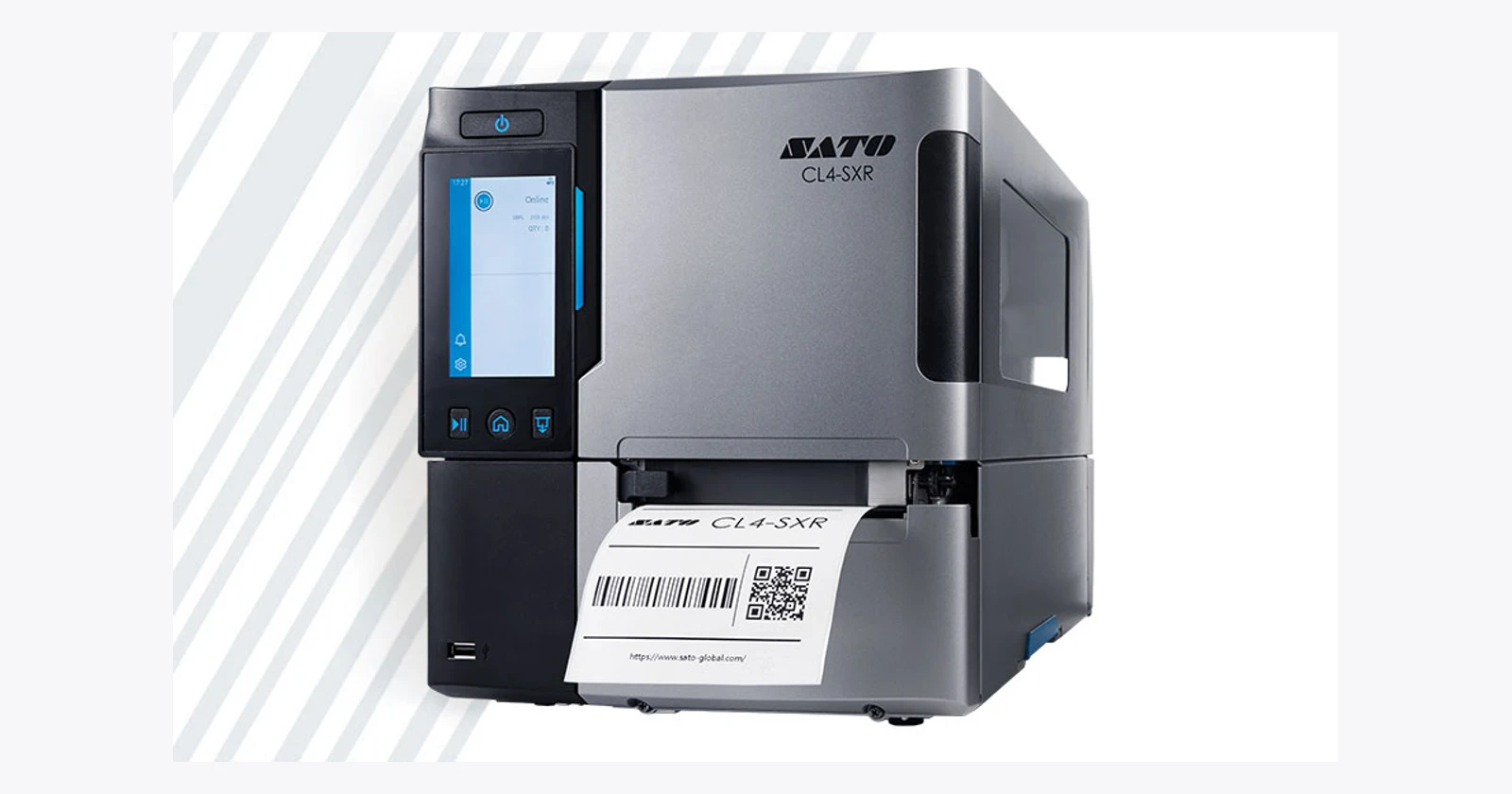
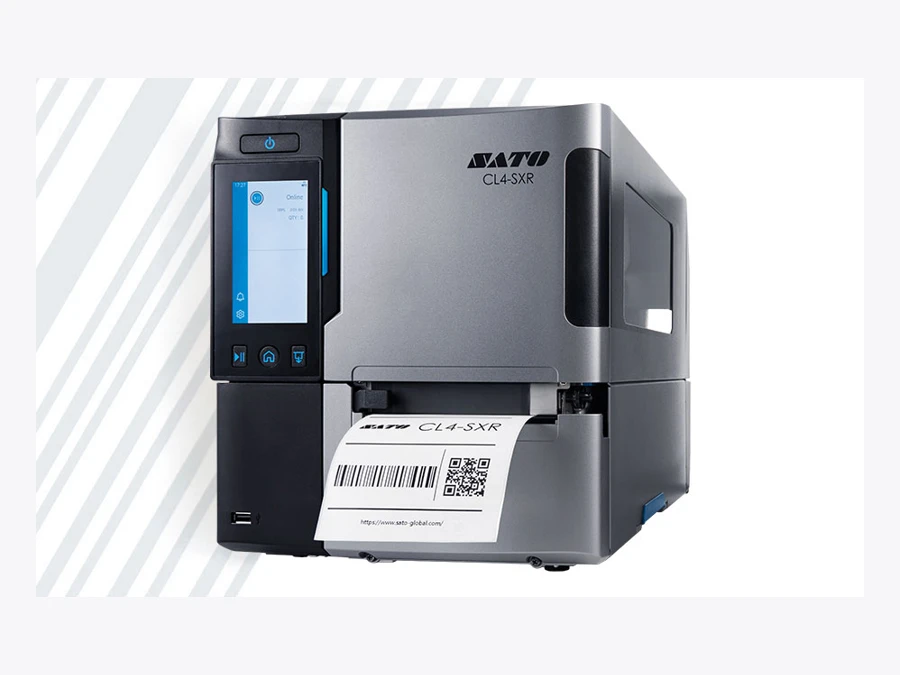
The CL4-SXR deserves attention at busy industrial stations. SATO lists different maximum speeds for its three resolutions, rather than a single speed that applies to every version. Its larger practical argument is maintenance: the company describes AI-based condition monitoring through SATO Online Services. Treat that as a vendor capability to evaluate, not a guarantee that a printer will never stop.
Ask what the service monitors, which alerts your team receives, whether a subscription or network connection is required and who acts on a warning during a night shift. A useful alert that nobody owns can still end in downtime. The pilot should include the support process as well as the machine.
Three printers, three operating decisions
| Family | Best question to ask | Main trade-off |
|---|---|---|
| CL4-SXR | Can a managed industrial station keep production supplied? | More capability to configure, support and justify |
| CT4-LX | Can a compact station guide a repeatable labelling task? | Check media handling, options and peak workload |
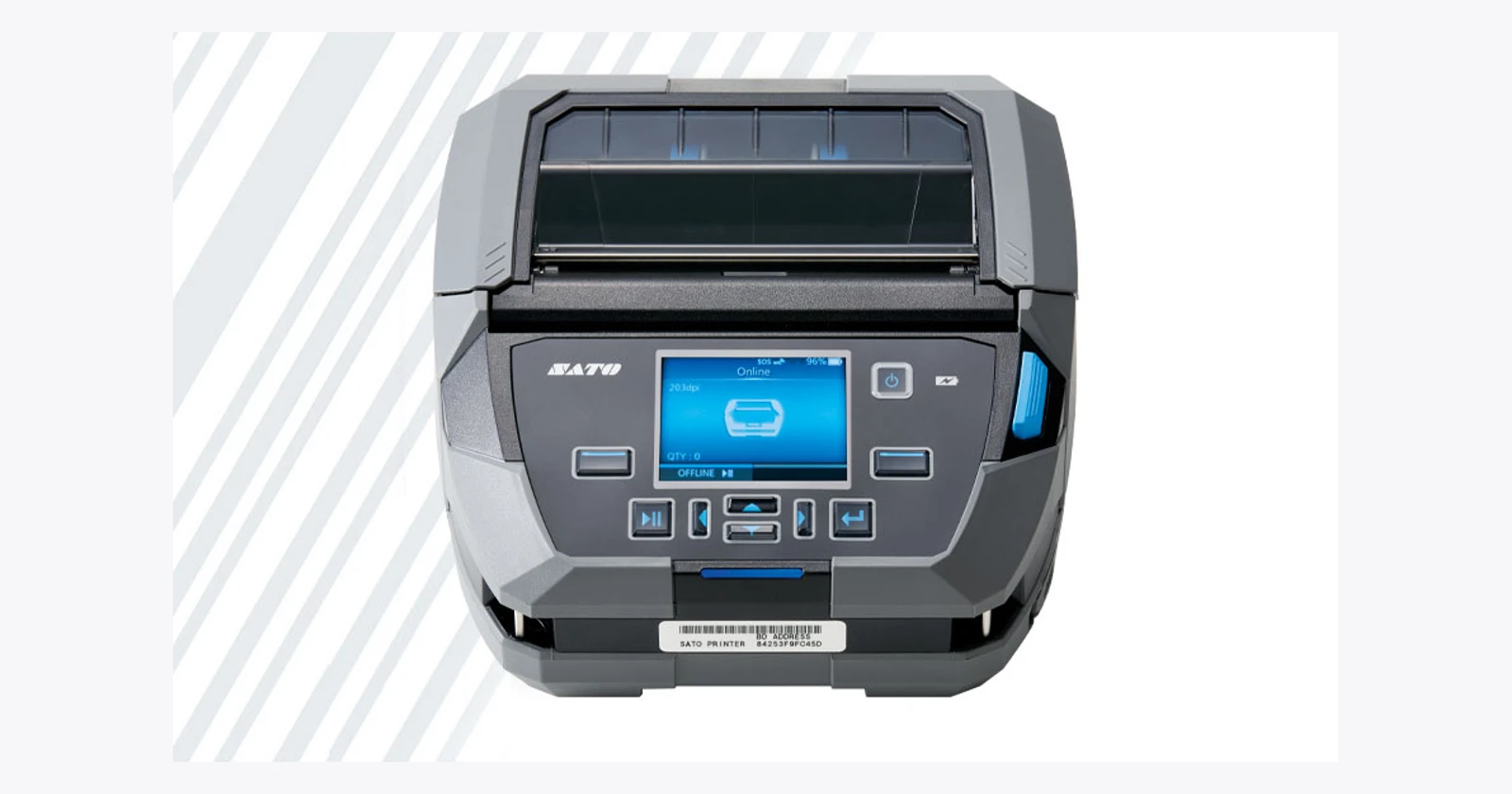
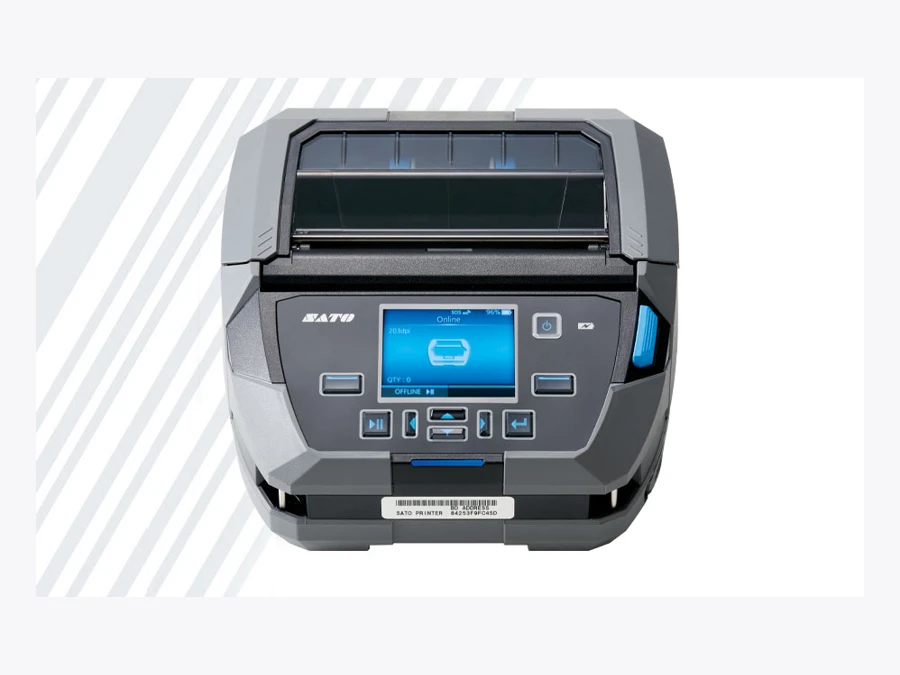
| PW4NX | Can printing beside the goods remove walking and sorting? | Charging, spare batteries, supplies and mounting follow the worker |
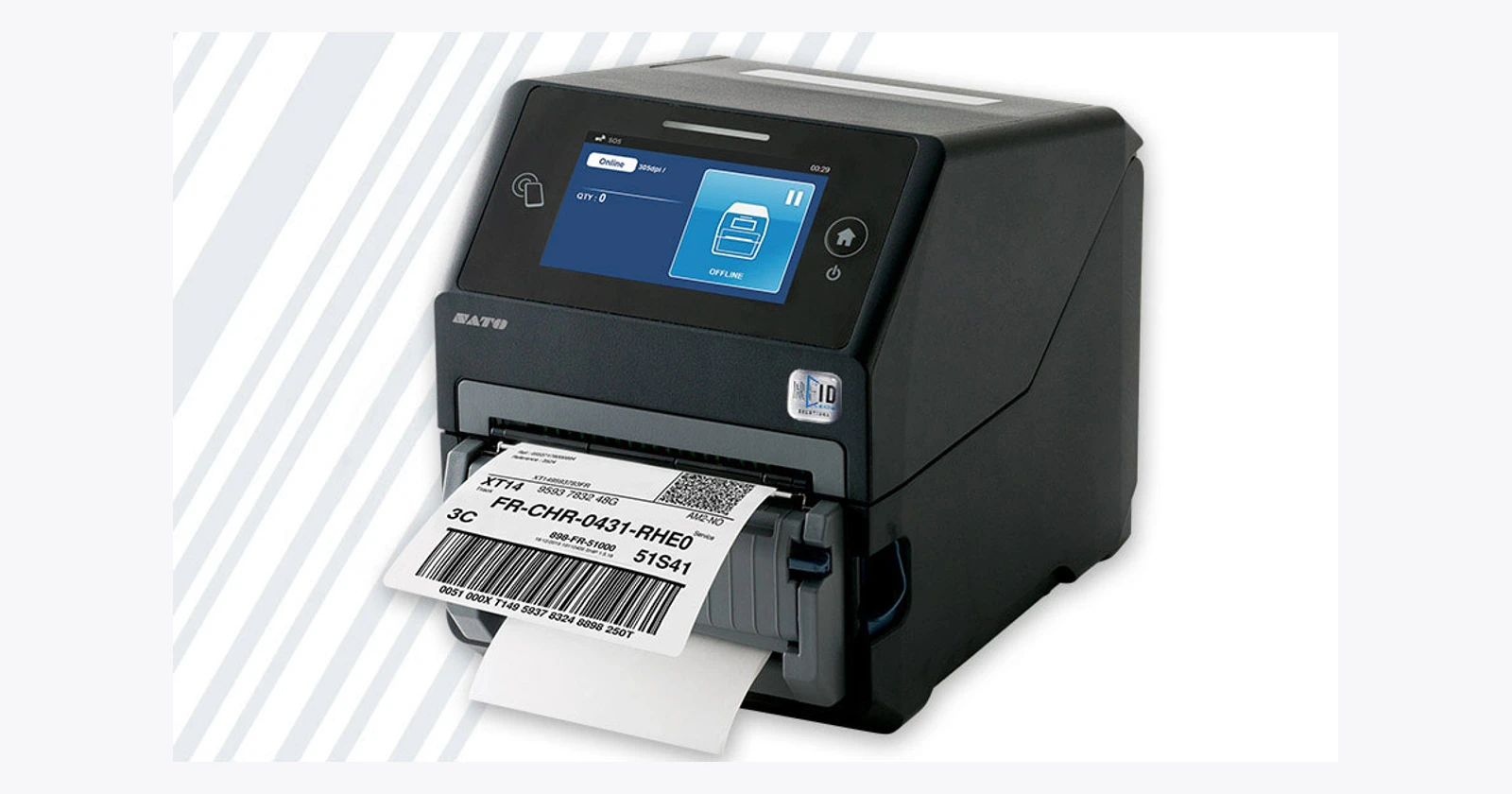
A desktop station remains a sensible answer when the job already happens at a desk. CT4-LX supports Application Enabled Printing, which SATO describes as a way to customize printer workflows and connect input devices. It can support a narrower, guided task without asking the operator to navigate a full business application for each label. That application still needs someone to design, test and maintain it. CT4-LX product information.
Start with the awkward cases. What happens when an item is unknown, a scale returns an unexpected value or an operator needs to reprint? A pleasant normal path cannot compensate for a recovery path that encourages people to invent workarounds. Give those cases clear instructions and preserve the identity of the underlying job.
Mobile printing moves the queue, too
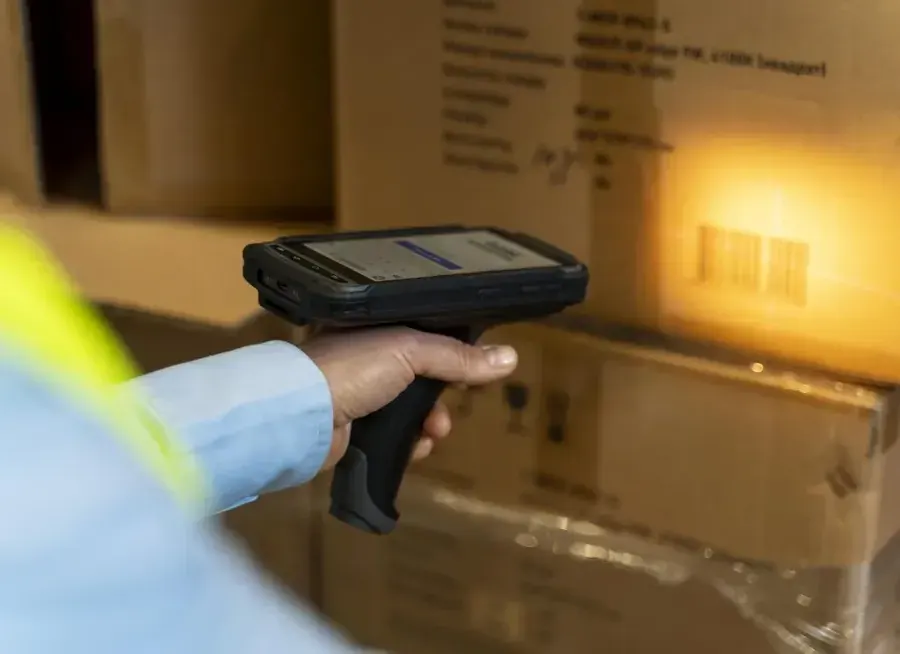
The PW4NX makes sense when a worker repeatedly returns to a print point while the goods stay elsewhere. Printing at the place of application can remove travel and reduce the opportunity to collect somebody else’s label. SATO also offers charging and mounting accessories, so this need not mean carrying the printer for an entire shift. PW4NX product information.
There is a cost to distributing printers. More people need access to the correct rolls. Batteries need a charging routine, and a damaged or misplaced unit needs a replacement path. A vehicle installation needs a suitable holder and power arrangement, with installation assessed for that vehicle. An accessory photograph is not approval for a particular forklift.
Compare a shared printer, several fixed stations and mobile printing on the same routes. Count the trips actually removed. If people must return to the desk for another part of the process anyway, moving only the printer might save very little.
Do not buy the wrong generation by accident
Small differences in a model name matter. An older CL4NX RFID listing is not the same product as CL4NX Plus RFID, and neither should inherit every SXR feature. SATO publishes lifecycle information for older equipment; check the exact model against it when deciding whether to repair, redeploy or replace. A current product page also does not prove stock at your local supplier. Manufacturer lifecycle list.
The same care applies to printer languages and accessories. Regional SXR materials differ in how they describe some emulations and their availability. Request the delivered firmware and tested language list in the proposal. Keep sample output from your actual label templates, including small text and dense codes.
Four seconds can matter. Prove where they come from.
Illustrative capacity: 125 hours per year. Removing four seconds from 450 daily labelling jobs over 250 working days releases 125 hours. At an assumed €30 per hour, that is €3,750 of capacity value before costs. This is an example, not a measured SATO result or an automatic reduction in payroll.
Include the time spent on roll changes, charging, error recovery and reprints in both versions of the trial. If a faster printer simply produces a bigger pile that somebody must sort, the benefit may disappear further down the task. Cash savings require an actual reduction in paid expenditure; spare capacity can instead absorb growth or reduce a backlog.
Keep label quality in the acceptance test
A readable barcode depends on more than resolution. GS1’s quality checklist includes contrast, space around the symbol and placement. Test the printed label after it has been applied and handled, using the conditions the job requires.
The final choice should explain a specific improvement: fewer trips, a clearer operator task, less interruption at a production station or easier maintenance. Ask the supplier to demonstrate that improvement with your data. Then choose the printer and service arrangement that sustain it through a busy shift.
Technical reference
SATO CL4-SXR · technical details
SATO CL4-SXR
Official product specifications
| Print or capture technology | Direct thermal / thermal transfer |
|---|---|
| Resolution | 203, 305 or 609 dpi |
| Vendor maximum speed | 18 ips at 203 dpi; 16 ips at 305 dpi; 6 ips at 609 dpi |
| Print width | 104 mm |
| Media widths or sizes | Label width 22–128 mm without liner; linerless 60–118 mm; mode-dependent lengths |
| Connectivity | USB A/B, Gigabit Ethernet, RS-232C, external I/O; optional Wi-Fi 6E/Bluetooth 5.2 |
| Display or controls | 4.3-inch color touchscreen, 480×272 |
| Processor or memory | ARM Cortex-A53 quad-core; 8 GB Flash / 2 GB RAM |
| Environmental | 0–40 °C continuous/tear/cutter; narrower dispenser/linerless conditions in sheet |
| Dimensions and weight | W275×D457×H321 mm; 15.5 kg excluding media, ribbon and options |
| Power or battery | AC100–240 V ±10%, 50/60 Hz |
| Accessories and options | Cutter, rotary cutter, linerless cutter, dispenser/rewinder, HF/UHF RFID, wireless kit; availability regional |
| Support and lifecycle notes | European release 29 September 2026. Regional firmware/emulation differences require confirmation. |
Evaluate for: High-volume industrial work with managed maintenance.
Before ordering: Confirm installed firmware, regional emulations, RFID availability and SOS service terms.
Checked 18 October 2026. Vendor maxima and options are configuration dependent. Photograph is a family reference, not proof of included accessories or app compatibility.
SATO CT4-LX · technical details
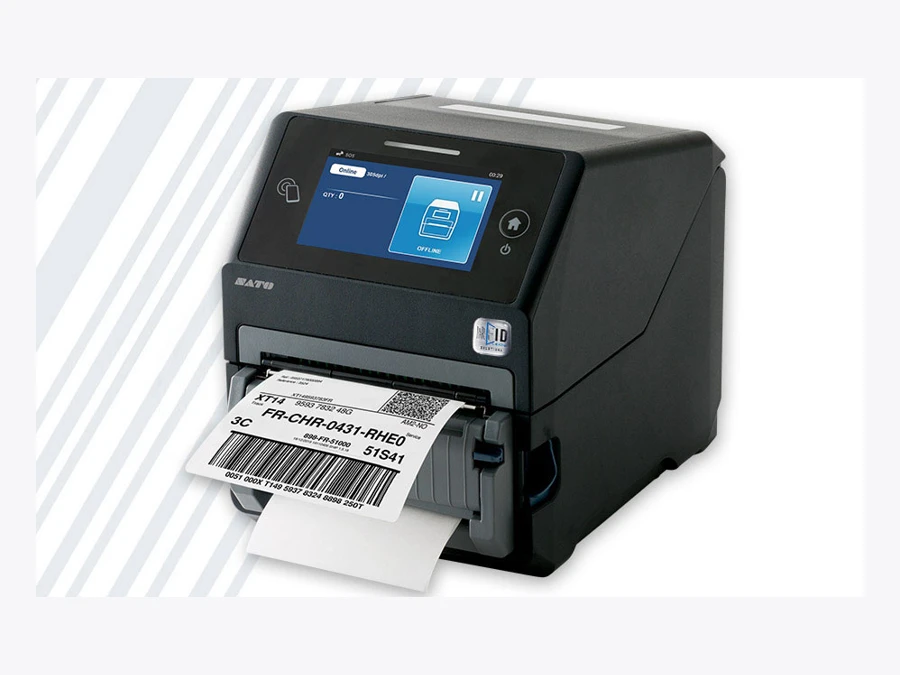
SATO CT4-LX
Official product specifications
| Print or capture technology | Direct thermal / thermal transfer |
|---|---|
| Resolution | 203 or 305 dpi |
| Vendor maximum speed | 8 ips at 203 dpi; 6 ips at 305 dpi; linerless mode up to 4 ips per datasheet |
| Print width | 104 mm maximum |
| Media widths or sizes | Label 22–115 mm; 25–118 mm including liner; mode-specific lengths |
| Connectivity | USB, Gigabit LAN, NFC standard; optional RS-232C and WLAN/Bluetooth kit |
| Display or controls | 4.3-inch resistive color touchscreen, 480×272 |
| Processor or memory | 32-bit 1 GHz; 4 GB ROM / 1 GB RAM |
| Environmental | 0–40 °C /30–80% RH non-condensing |
| Dimensions and weight | W178×D238×H214 mm; 3.4 kg TT model |
| Power or battery | AC100–240 V ±10%, 50/60 Hz adapter; DC24 V output |
| Accessories and options | Cutter; dispenser; linerless kit; RFID configurations; RTC; wireless kit |
| Support and lifecycle notes | Currently listed; datasheet says March 2021, copyright 2022. Confirm present part numbers. |
Evaluate for: Compact label stations with guided operator tasks.
Before ordering: Confirm accessory, media and AEP application requirements.
Checked 18 October 2026. Vendor maxima and options are configuration dependent. Photograph is a family reference, not proof of included accessories or app compatibility.
SATO PW4NX · technical details
SATO PW4NX
Official product specifications
| Print or capture technology | Direct thermal; dedicated linerless model available |
|---|---|
| Resolution | 203 dpi |
| Vendor maximum speed | Continuous/tear up to 6 ips; brochure limits dispenser/linerless to 4 ips; web overview conflicts |
| Print width | 104 mm |
| Media widths or sizes | 41–114 mm including liner; roll OD up to 67 mm; mode-dependent lengths |
| Connectivity | USB mini-B, Bluetooth 5.0 BLE, NFC, 802.11a/b/g/n/ac WLAN; confirm app route |
| Display or controls | 2.4-inch color LCD, 240×320 |
| Processor or memory | Dual 1 GHz CPUs; 8 GB ROM /1 GB RAM |
| Environmental | IP54 without case; operating −15–50 °C /10–90% RH non-condensing |
| Dimensions and weight | W180×D195×H85 mm excluding protrusions; 1440 g including battery, excluding media |
| Power or battery | 14.4 V /2500 mAh (36 Wh in brochure); web says 35 Wh |
| Accessories and options | Charging cradle; battery chargers; adapters; straps; case; mounting/holder options |
| Support and lifecycle notes | Current listing; brochure March 2023. Confirm battery and dispenser-speed discrepancies with supplier. |
Evaluate for: Printing where goods are handled rather than at a central desk.
Before ordering: Plan charging, spare batteries, attachment and safe mounting; confirm media mode.
Checked 18 October 2026. Vendor maxima and options are configuration dependent. Photograph is a family reference, not proof of included accessories or app compatibility.
Questions before you order
What is newly released in this SATO comparison?
SATO Europe announced the CL4-SXR and CL6-SXR European launch on 29 September 2026, following the global rollout from January. CT4-LX and PW4NX are established current alternatives.
Does a faster print speed guarantee a faster warehouse?
No. Print speed is only one part of label request, handling, travel, application and recovery time. Measure the complete task.
Are CL4NX and CL4-SXR the same printer?
No. Model suffixes and generations matter. Check exact lifecycle records and replacement recommendations for older units rather than applying a family-wide retirement assumption.
Sources and scope
Checked 18 October 2026. Selected current listings; regional availability and exact part numbers require confirmation. Practical comparisons and illustrative calculations are our analysis. No independent hardware benchmark was performed.