RFID saves time by changing how you capture stock
RFID can remove the need to handle and aim at every label during a stock count. Gates can capture tagged goods as they pass a doorway. Forklift-mounted readers can identify a load during the move. Those changes can free paid time in counting, receiving, dispatch and searching for stock.
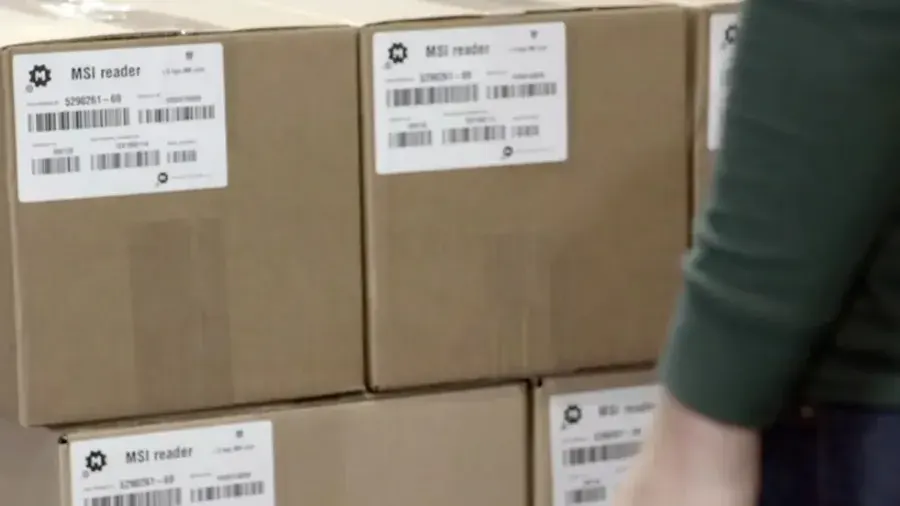
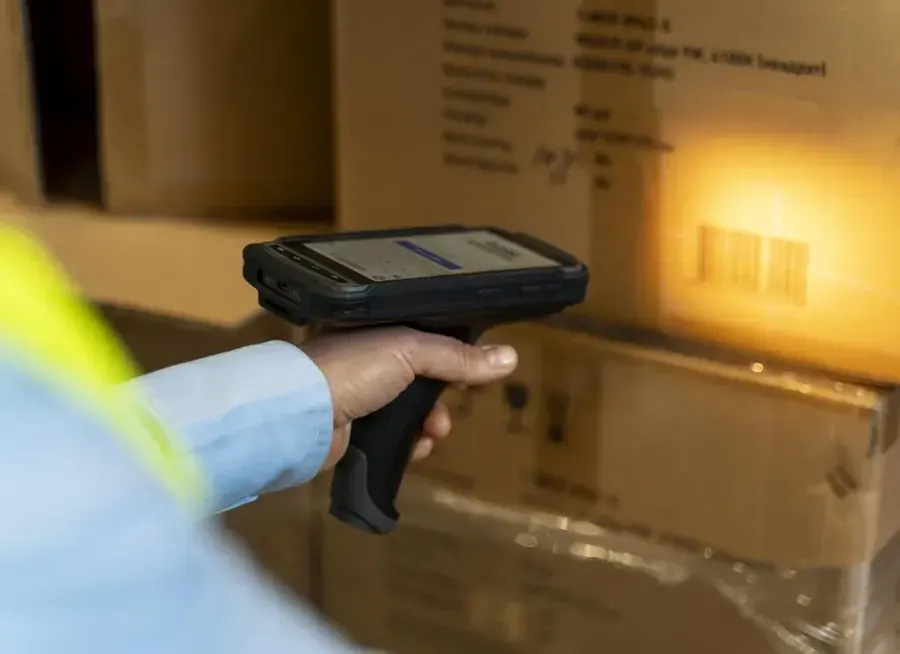
Barcode scanning remains a useful choice for deliberate item and location checks, especially when volumes are small or stock arrives without RFID tags. Paper has little equipment cost, but writing, re-entry and reconciliation all belong in the comparison. The strongest business case measures the entire transaction, including exceptions.
Research checked 14 October 2026. This guide focuses on passive UHF / RAIN RFID for warehouse tracking. Manufacturer specifications, reported customer results and illustrative calculations are labelled separately. Hardware and integration have not been tested by us.
Compare the work, not just the reader
| Question | Pen and paper | Handheld barcode | UHF RFID |
|---|---|---|---|
| How is identity captured? | A worker reads and records it. | The worker presents a visible barcode to a camera or imager. | A reader captures the identity of compatible tags within its read zone. |
| Group counting | Manual count or individual entries. | Usually deliberate scans of individual labels. | Can capture multiple tagged items without sight of each printed label. |
| When does the system change? | After someone enters and checks the records. | At the transaction, if integrated with the WMS. | After reader events are filtered, validated and mapped to a transaction. |
| Where time can fall | Low setup effort; little automation. | Less typing and re-entry; prompt item/location checks. | Less individual handling, batch counts and automatic passage/load capture. |
| Costs to include | Forms, re-entry, checking and corrections. | Scanner/phone, labels, application and support. | Tags, readers, antennas, installation, integration and support. |
| Typical limitation | Delayed updates and handwriting or transcription errors. | Label visibility, access and the effort per scan. | Tag placement, material effects, unwanted reads and missed tags. |
This comparison uses handheld barcode capture as the baseline. Fixed barcode cameras and multi-code decoding can also automate suitable flows. Compare equivalent complete systems when evaluating a gate or conveyor project.
What a reported warehouse result looks like
30 labor hours saved each week
Impinj’s Asset Recovery Specialists case reports 30 weekly labor hours saved after replacing manual asset tracking with RAIN RFID. The San Diego facility held up to 2,000 assets, with 100–150 flowing through daily. Eight xSpan zones helped staff find equipment in minutes rather than hours.
The case also reports a 30% increase in order-production rate. These are results from one asset-recovery operation and its integrated tracking system, not a universal comparison with barcode scanning. The article was published in November 2019; it is evidence of an implemented workflow, not a current hardware quotation.
To put the reported hours into a budget, 30 hours × 52 weeks × an assumed €30/hour equals €46,800/year of labor capacity before system costs. That euro amount is our illustration; the case does not provide it. Whether it becomes cash savings depends on avoided paid work.
Mobile RFID: count groups instead of aiming at each label
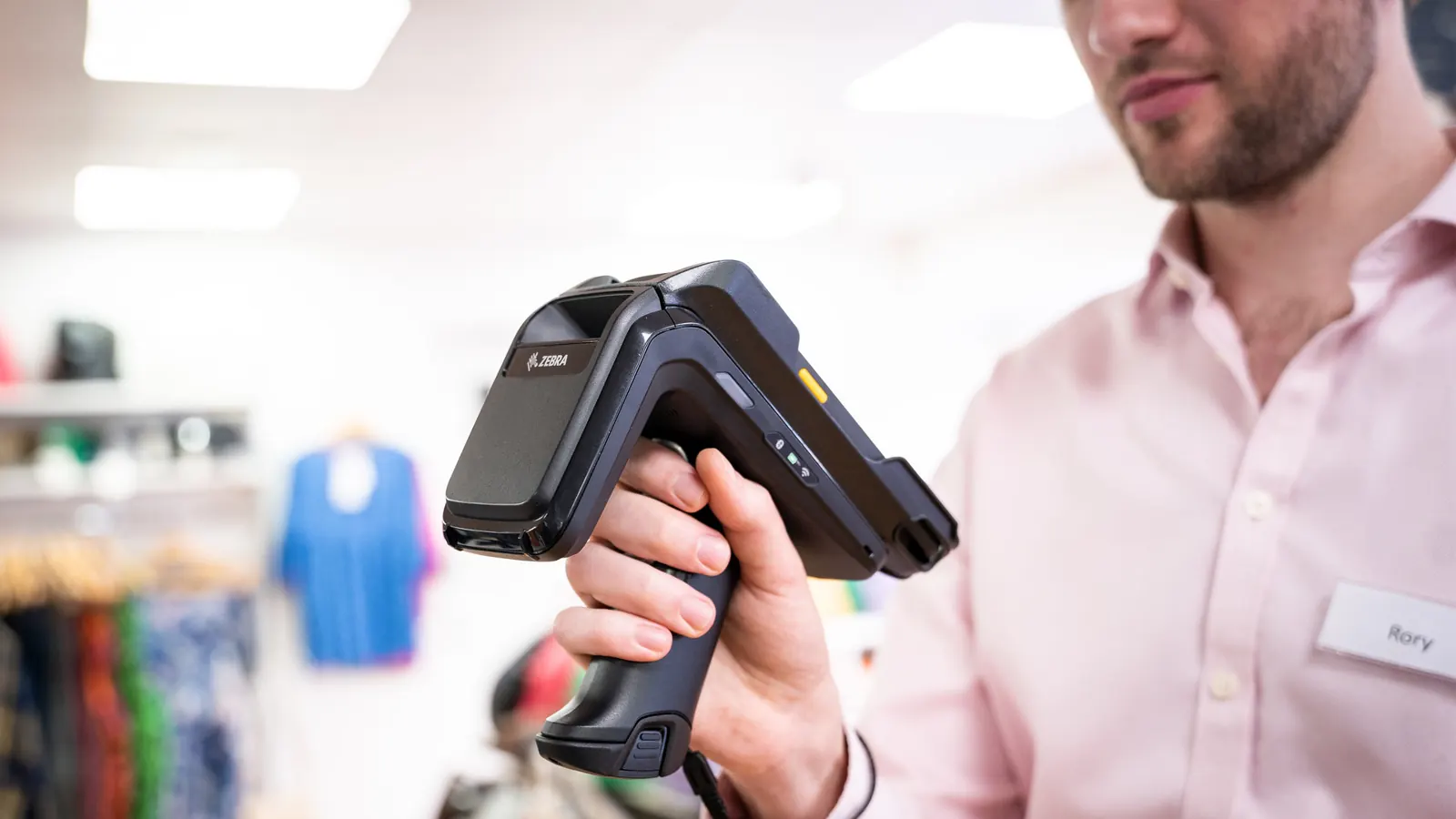
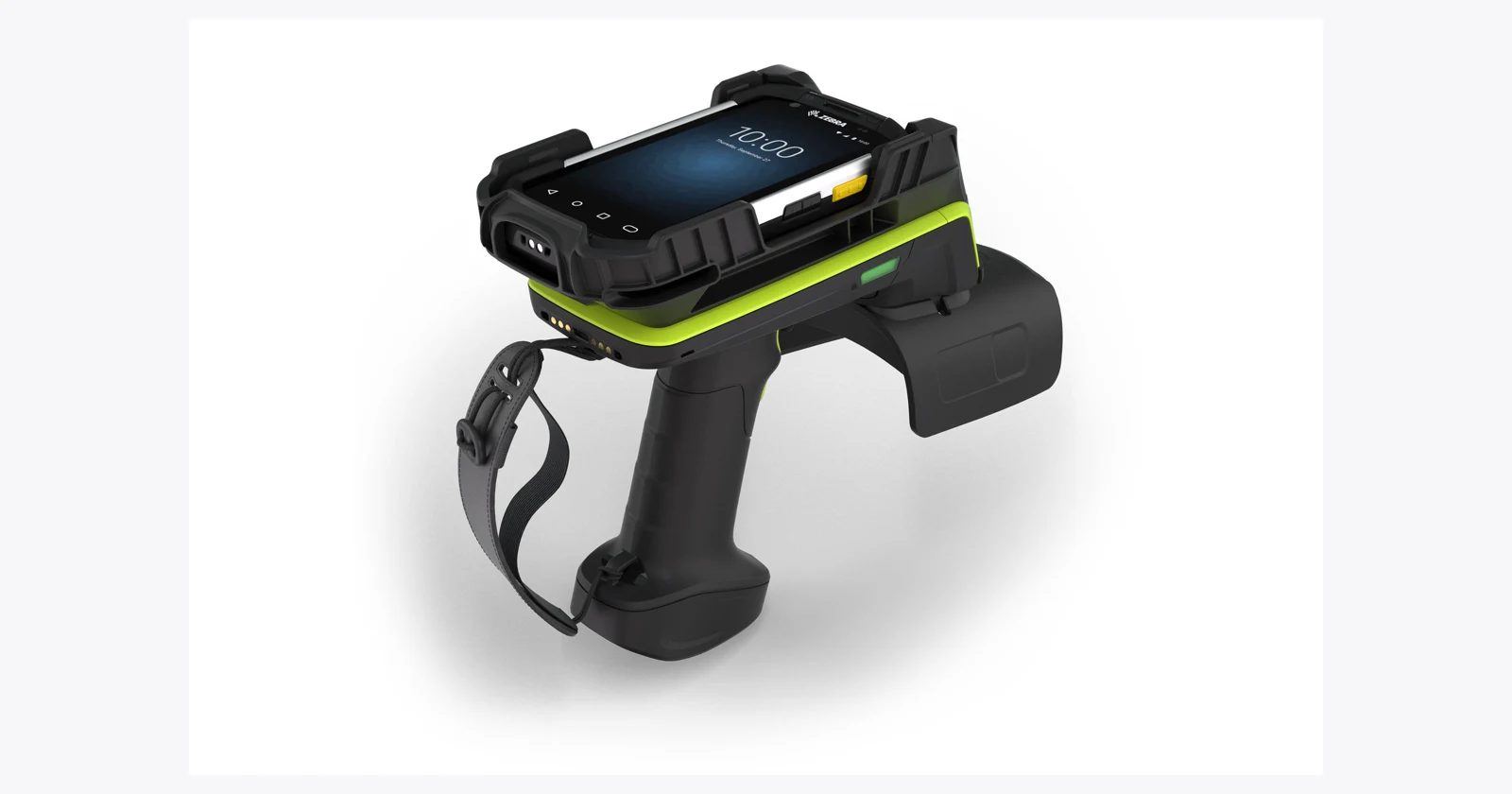
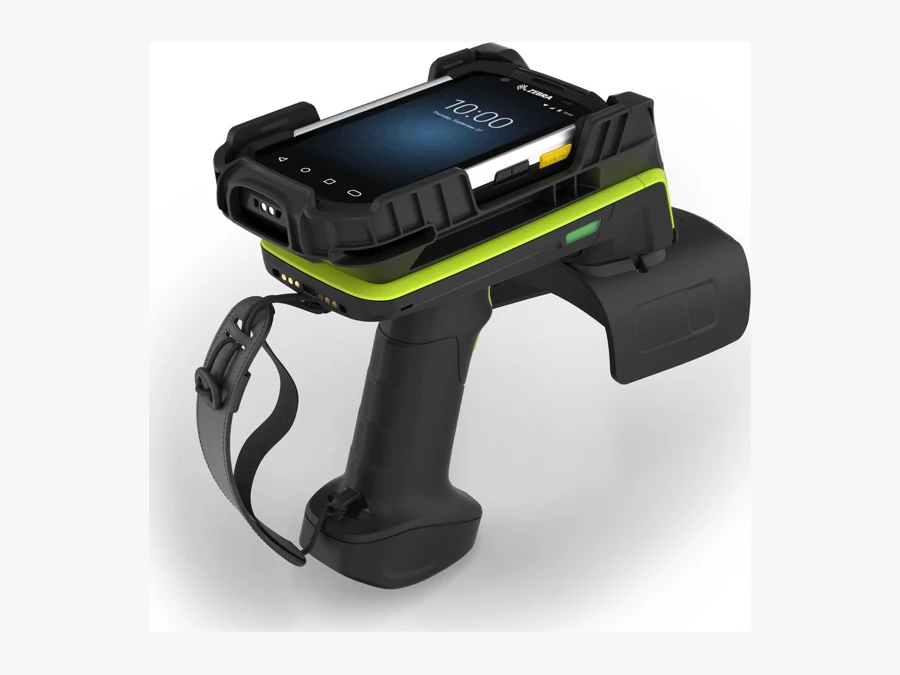
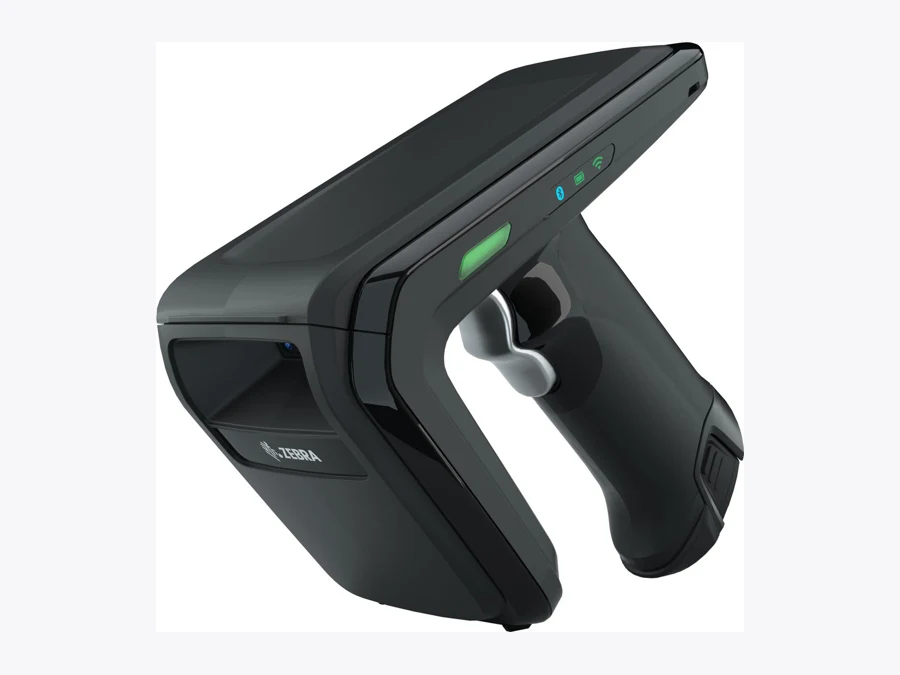
A handheld reader is often the simplest place to pilot RFID. Staff sweep the agreed area, review missing items and investigate exceptions. Zebra’s RFD40 and RFD90 sleds provide mobile UHF capture; the compatible host device and application turn reads into a usable count.
The RFD90 specification lists a peak of 1,300+ tag reads per second. A radio can report the same tag repeatedly. A completed count still includes walking, reaching awkward stock, checking the expected list and resolving unread or unexpected tags. Divide neither your inventory nor your labor bill by the peak read rate.
Identify individual units uniquely when counting units. A tag on one pallet identifies that pallet; it proves the carton contents only when the system has an accurate, maintained pallet-to-content relationship. Keep a barcode fallback for damaged tags and untagged arrivals.
RFID gates: capture goods during the passage
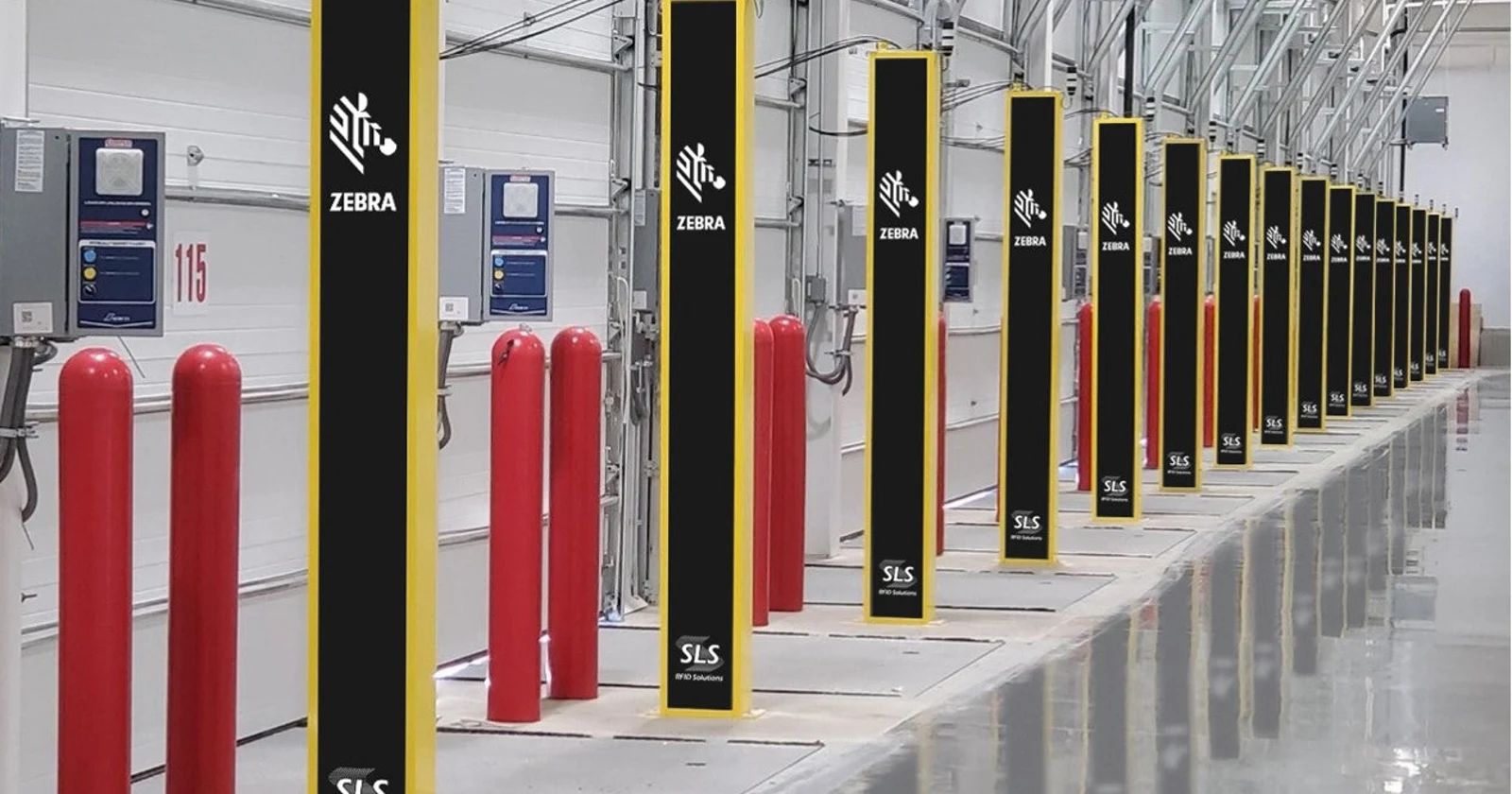
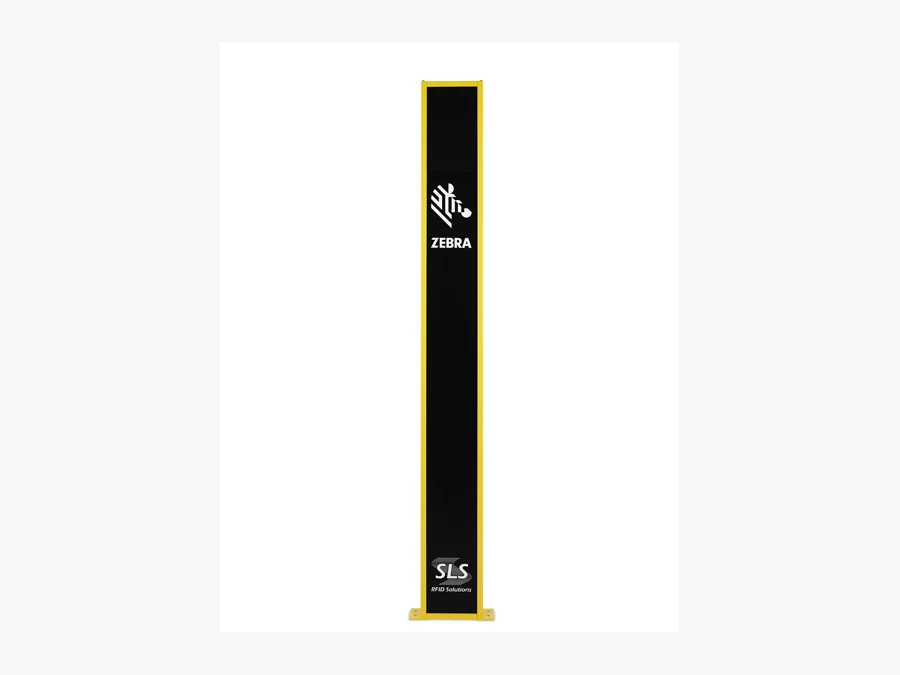
A gate places antennas around a defined transfer point. Tagged goods travel through while the system checks whether the expected items have entered or left. Zebra’s integrated portal portfolio includes dock-door, wall-mount and tunnel approaches. Kathrein’s dock-door solution describes automatic capture followed by central-system processing.
The opportunity is to remove a stop-and-scan step, or check a group of items without presenting each label. The system must associate the read with the correct door, load, direction and order. A tag near a gate is not proof that it passed through it. Neighbouring doors, stationary stock and loads turning around belong in the acceptance test.
Include barriers, sensors, networking, physical protection and software rules in the design. A fixed RFID reader such as the Impinj R700 is one component of that system; buying the reader alone does not create a working portal.
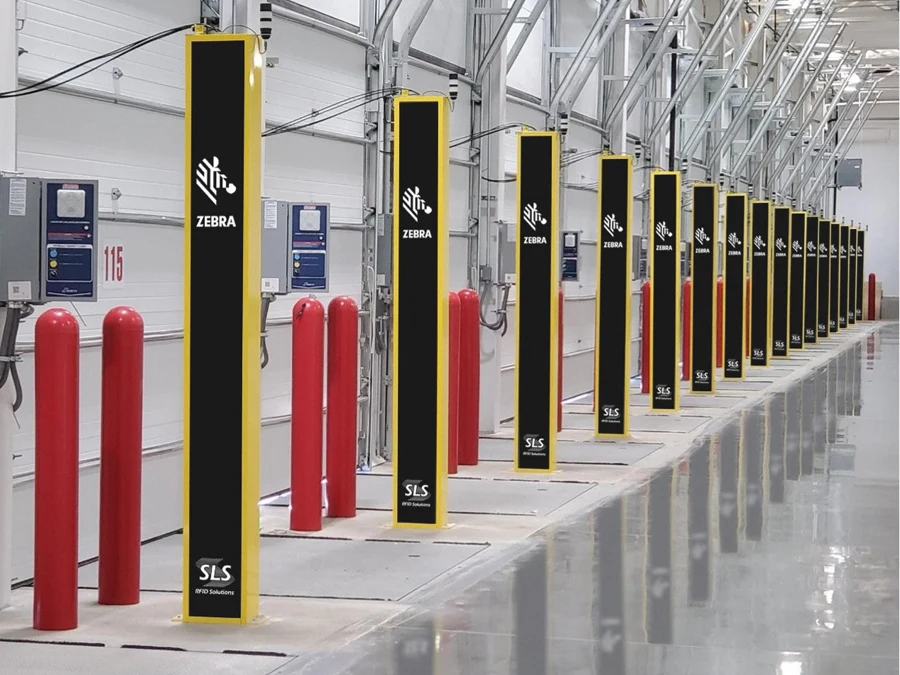
Forklift RFID: identify the load while it moves
Vehicle-mounted readers bring capture to the load. A tested installation can avoid leaving the truck to find and scan a label, then manually entering the movement. It can also help associate a pallet with the receiving or putaway task being performed.
Kathrein’s industrial-vehicle case describes a manufacturer replacing barcode tracking with RFID, including shorter loading times because forklift drivers read labels without getting off the truck. It reports the process benefit without a time percentage or cash figure, so none is attached to that example here.
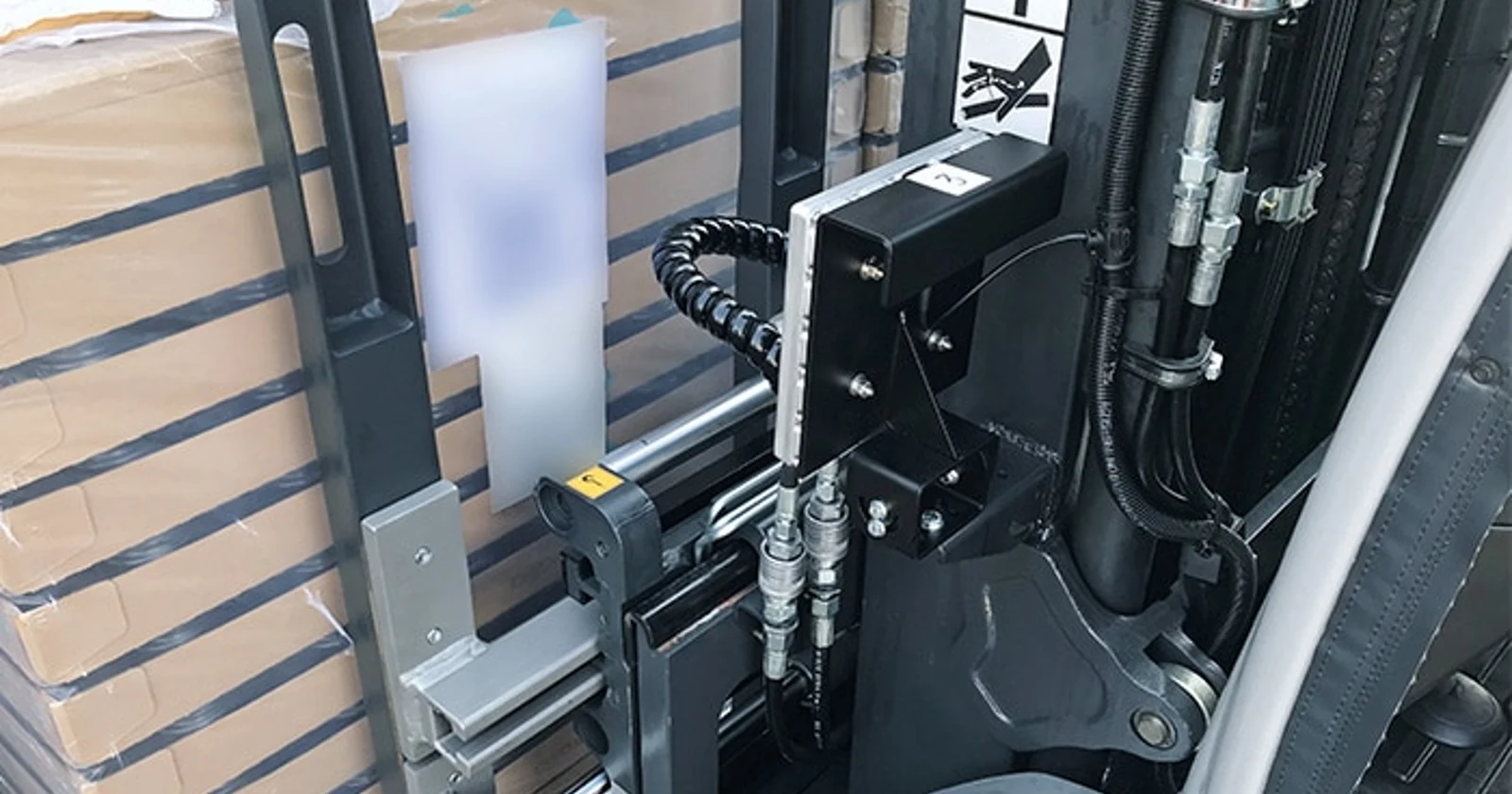
SICK and Coppernic’s 2022 case describes replacing an unreliable pen-and-paper pallet flow with an on-board UHF system. An RFU63x reader, external antennas and a tablet delivered handling information to the driver. It is a complete integration example, not a promise that the same reader automatically fits every truck.
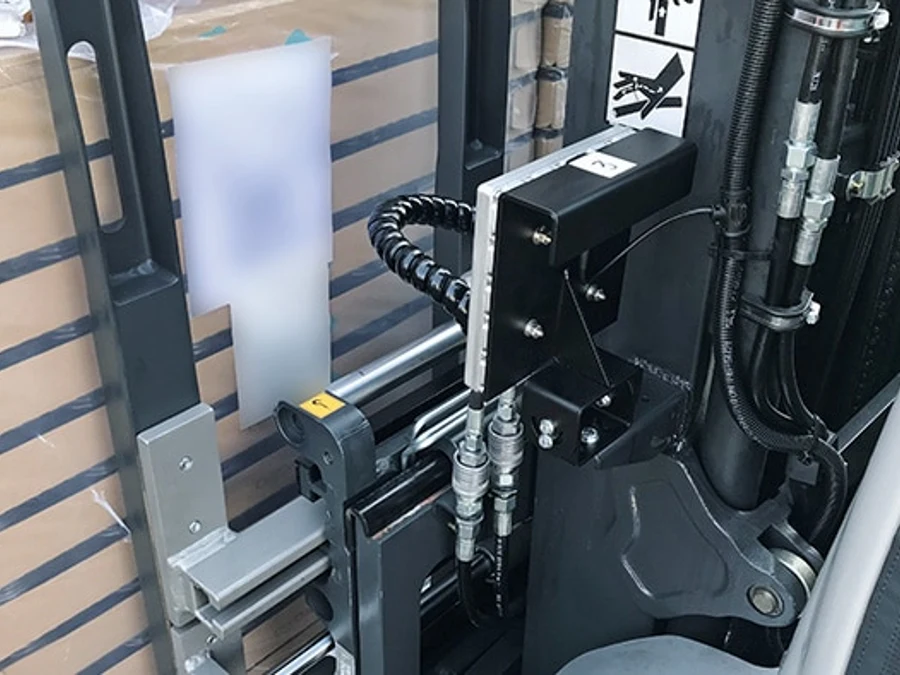
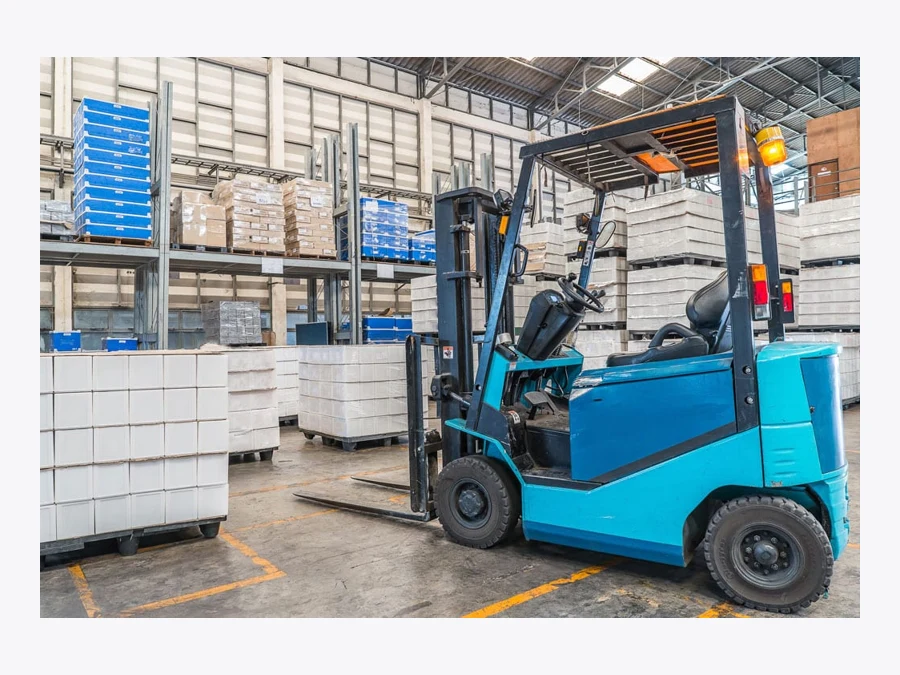
A practical pilot checks empty forks, two nearby pallets, different loads, lift heights and the route past stored stock. Confirm vehicle power, vibration protection and cable routing. Location needs a defined method, such as a validated location-tag or localisation system; reading a pallet ID alone does not establish its exact storage position.
How much money could RFID save?
88% less counting time than handheld barcode scanning
Assume 10,000 tagged units, one count per week, 6 seconds per unit with handheld barcode capture and 2 hours for the complete RFID count, including travel and exceptions. Barcode takes 16 hours 40 minutes; RFID takes 2 hours. That frees 14 hours 40 minutes per count.
| Method | Assumed complete-count effort | Time/count | Annual labor value |
|---|---|---|---|
| Paper | 18 seconds/unit, including recording and re-entry. | 50 hours | €78,000 |
| Handheld barcode | 6 seconds/unit, including access and capture. | 16 h 40 min | €26,000 |
| RFID | 2 hours for the entire 10,000-unit count. | 2 hours | €3,120 |
On those assumptions, RFID releases €22,880/year of labor capacity compared with barcode, or €74,880 compared with paper. That is 88% less count time than barcode and 96% less than paper. These percentages apply only to this assumed count; they are not overall warehouse cost reductions.
Add tags and system costs before calling it savings
For a reusable tagged population, assume an incremental RFID investment of €12,000: €2,000 for 10,000 tags at €0.20, €5,000 for readers/host equipment and €5,000 for setup and integration. Assume €3,600/year extra running cost: €400 for replacing 2,000 tags at €0.20 and €3,200 for software/support. These are budget assumptions, not manufacturer prices.
Against the existing barcode workflow, annual capacity value after extra running costs is €19,280. If the full released capacity avoids paid labor costs throughout the year, simple payback on the €12,000 investment is about 7.5 months. First-year benefit after both the incremental investment and running costs is €7,280. Staff reassignment alone does not reduce payroll; describe that outcome as capacity.
If tags are consumed on outgoing goods, use annual units shipped rather than the stock population when budgeting tags. At 1,000,000 new tags/year and an assumed €0.08 each, tags alone cost €80,000/year. That can outweigh the labor benefit in this count example. Supplier-applied tagging, reusable containers and repeated counts change the economics.
Try your warehouse’s numbers
Use pilot timings for the whole count. This calculator estimates labor capacity and a conditional payback; it does not forecast performance.
Annual capacity value vs barcode: €22,880
Annual capacity value vs paper: €74,880
After extra annual RFID running costs, vs barcode: €19,280
Conditional simple payback: 7.5 months
Negative values mean the assumed RFID count/cost is worse than the baseline. Payback assumes capacity becomes avoided paid cost. Enter all incremental tag, software and support costs; do not add overlapping workflow benefits.
Start where handling repeats most often
Choose mobile counting when repeated inventory work is the largest burden. Choose a gate when a clear passage provides a reliable transaction point. Choose forklift capture when load identification and manual recording interrupt the move. Preserve barcode checks where they deliberately confirm a specific item or bin, and retain a controlled paper fallback for outages.
Approve the pilot against the expected unique-item list, missed and unwanted reads, correction time and complete task duration. Test metal, liquids, wrapped loads, damaged tags and untagged goods. Include tagging effort; a faster count does not erase time spent applying tags upstream.
Raptool WMS supports mixed Android, iOS, Windows and Mac devices and barcode-oriented warehouse workflows. For RFID, agree the reader connection or middleware, ID mapping, de-duplication, transaction rules and exception handling with Raptool. Its platform page does not certify every RFID device or automatically include the gate and vehicle integrations described here.
Tags
Plan a measured RFID pilot around one warehouse task, then connect the verified events to your WMS.
Discuss your workflow with RaptoolTechnical data and manufacturer information
Compare the exact configuration. Expand a model below or click its slider card.
Zebra RFD40 Premium Plus · Mobile · UHF + barcode
Mobile · UHF + barcode
Zebra RFD40 Premium Plus
Zebra Technologies · Manufacturer website
Zebra Technologies supplies the device family shown. Accessories, configuration and regional availability must be specified separately.
| Type | RFID sled; compatible host/application required |
|---|---|
| Tag standard | EPC Class 1 Gen 2 / Gen2 V2 |
| Published peak | 1,300+ tag reads/sec; not unique counted items/sec |
| Nominal range | About 6+ m; tag/environment dependent |
| Battery | 7,000 mAh |
| Barcode | SE4100 imager on Premium Plus |
Advantage
A mobile route to group counts and finding tagged stock, with a barcode fallback.
Trade-off
Sled, host and adapter add weight and cost; software must process the reads.
Candidate uses: Cycle counting; item finding; exception checks
Check before ordering: Confirm host/adapter, regional radio SKU, tag population and Raptool integration.
Product page · Manufacturer specifications
Published specifications checked 14 October 2026. Product photos can show a family or accessory configuration. Validate the selected setup with Raptool.
Zebra RFD90 series · Mobile · rugged UHF
Mobile · rugged UHF
Zebra RFD90 series
Zebra Technologies · Manufacturer website
Zebra Technologies supplies the device family shown. Accessories, configuration and regional availability must be specified separately.
| Type | RFD9030 / RFD9090 RFID sleds; host required |
|---|---|
| Published peak | 1,300+ tag reads/sec |
| Nominal range | 9030: 12 m; 9090: 29 m; conditions apply |
| Protection | IP65 / IP67; 1.8 m drop test specification |
| Battery | 7,000 mAh |
| Barcode | Imager options; select the configuration |
Advantage
Rugged handheld option for industrial stock counts and wider read distances.
Trade-off
Long range can collect unwanted nearby tags; compare weight and antenna size.
Candidate uses: Industrial inventory; outdoor assets; item finding
Check before ordering: Specify 9030 or 9090 and scan engine. A maximum range is not an accuracy promise.
Product page · Manufacturer specifications
Published specifications checked 14 October 2026. Product photos can show a family or accessory configuration. Validate the selected setup with Raptool.
Zebra Transition RFID Portal · Gate · fixed capture
Gate · fixed capture
Zebra Transition RFID Portal
Zebra Technologies · Manufacturer website
Zebra Technologies supplies the device family shown. Accessories, configuration and regional availability must be specified separately.
| Type | Integrated dock-door/chokepoint RFID portal |
|---|---|
| Components | Fixed RFID reader and antennas in a portal assembly |
| Power | PoE-based integrated portfolio; verify exact model |
| Installation | Fixed passage / dock-door read zone |
| Application | Monitor tagged assets passing a defined point |
Advantage
Captures tagged loads as they pass a doorway, reducing deliberate manual scans.
Trade-off
RF tuning, physical installation and neighbouring doors require a site survey.
Candidate uses: Receiving; dispatch; shipment verification
Check before ordering: Confirm local availability and exact portal model, passage width, sensors and read-zone performance.
Product page · Manufacturer specifications
Published specifications checked 14 October 2026. Product photos can show a family or accessory configuration. Validate the selected setup with Raptool.
Zebra FXR90 · Fixed · rugged reader
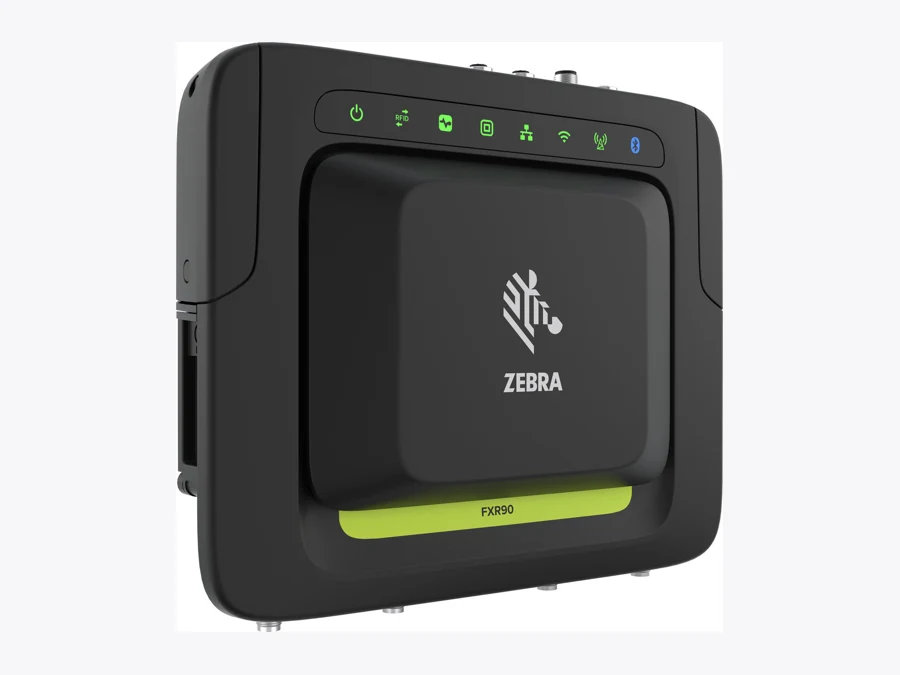
Fixed · rugged reader
Zebra FXR90
Zebra Technologies · Manufacturer website
Zebra Technologies supplies the device family shown. Accessories, configuration and regional availability must be specified separately.
| Type | Ultra-rugged fixed UHF RFID reader |
|---|---|
| Protection | Published IP65 / IP67 sealing |
| Connectivity | Wi-Fi 6 and Bluetooth; configuration-dependent |
| Antenna | Integrated-antenna and external-antenna configurations |
| System role | Reader component; mounting and application design separate |
Advantage
A rugged component for RFID capture in industrial or outdoor installations.
Trade-off
It is not a complete gate or forklift solution by itself.
Candidate uses: Industrial gates; vehicle installations after engineering review
Check before ordering: Validate vehicle power, antenna positioning, vibration, cabling and radio configuration.
Product page · Manufacturer specifications
Published specifications checked 14 October 2026. Product photos can show a family or accessory configuration. Validate the selected setup with Raptool.
Impinj R700 series · Fixed · reader component
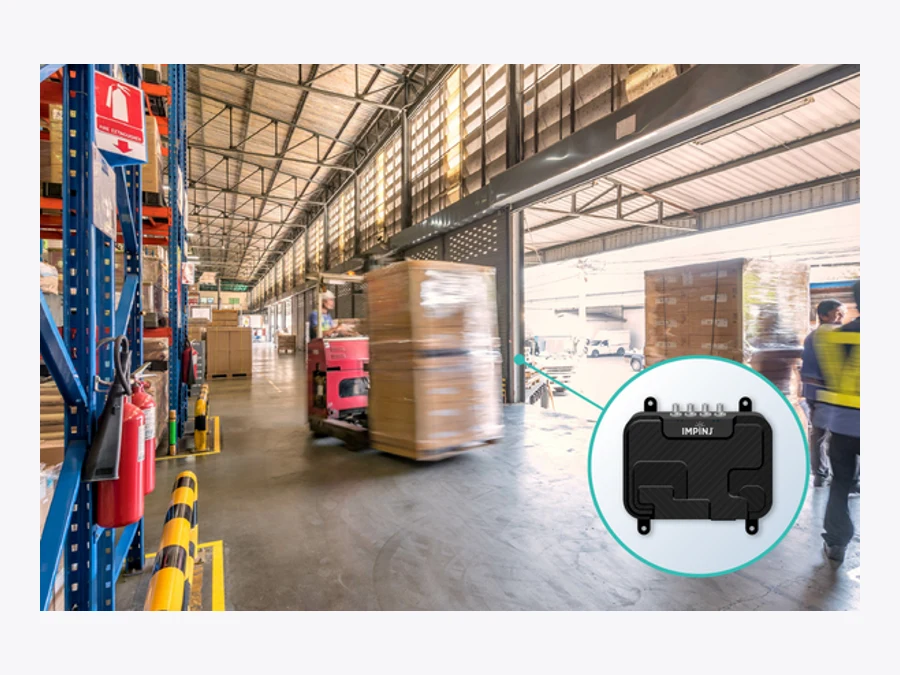
Fixed · reader component
Impinj R700 series
Impinj · Manufacturer website
Impinj supplies the device family shown. Accessories, configuration and regional availability must be specified separately.
| Type | Fixed RAIN RFID reader |
|---|---|
| Published peak | Up to 1,300+ tag reads/sec |
| Edge compute | 64-bit processing; on-reader applications |
| Interface | IoT Device Interface with MQTT support |
| Antenna expansion | Up to 32 antennas through optional hubs |
| Configuration | Current upgraded reader differs from earlier versions |
Advantage
Flexible reader component for custom portals, conveyors and automated read zones.
Trade-off
Antennas, installation, middleware and tuning belong in the complete quote.
Candidate uses: Dock doors; conveyors; dense tagged-item flows
Check before ordering: Select the current variant and regional certification; confirm firmware, antenna hubs and software interface.
Published specifications checked 14 October 2026. Product photos can show a family or accessory configuration. Validate the selected setup with Raptool.
Impinj xSpan gateway · Fixed · overhead/wall
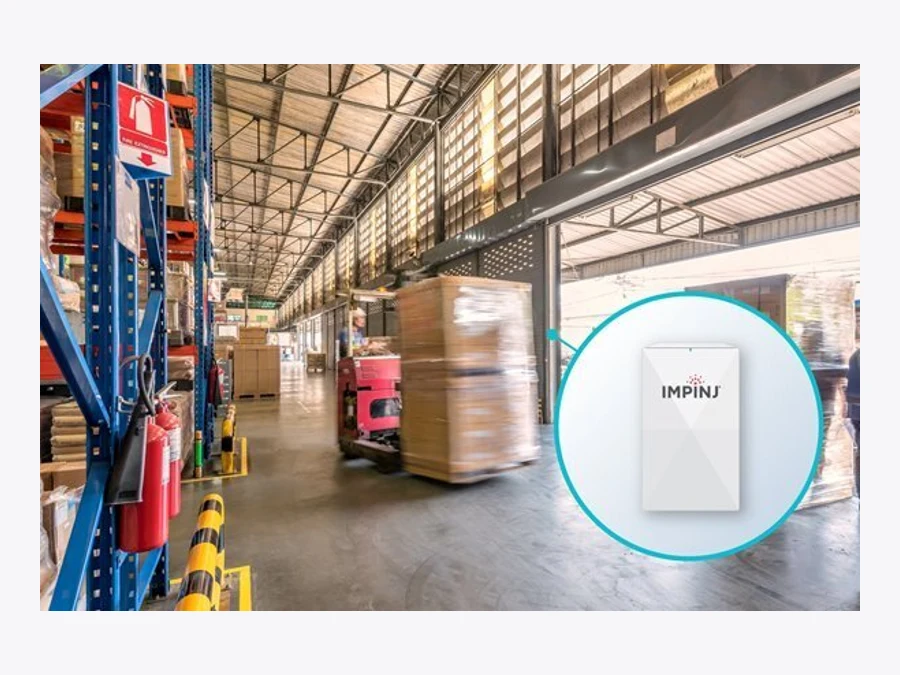
Fixed · overhead/wall
Impinj xSpan gateway
Impinj · Manufacturer website
Impinj supplies the device family shown. Accessories, configuration and regional availability must be specified separately.
| Type | Integrated RAIN RFID reader with antenna array |
|---|---|
| Installation | Overhead or wall |
| Monitoring | Item identity and movement along a single axis |
| Published field of view | Up to 93 m²; installation dependent |
| System role | Continuous monitoring infrastructure |
Advantage
Provides ongoing visibility without handing every tracking task to a worker.
Trade-off
Coverage and location interpretation must be validated in the actual layout.
Candidate uses: Asset zones; item movement; dock-door solutions
Check before ordering: Survey coverage and unwanted reads; a zone event is not automatically an exact shelf position.
Published specifications checked 14 October 2026. Product photos can show a family or accessory configuration. Validate the selected setup with Raptool.
Kathrein dock-door solution · Gate · engineered system
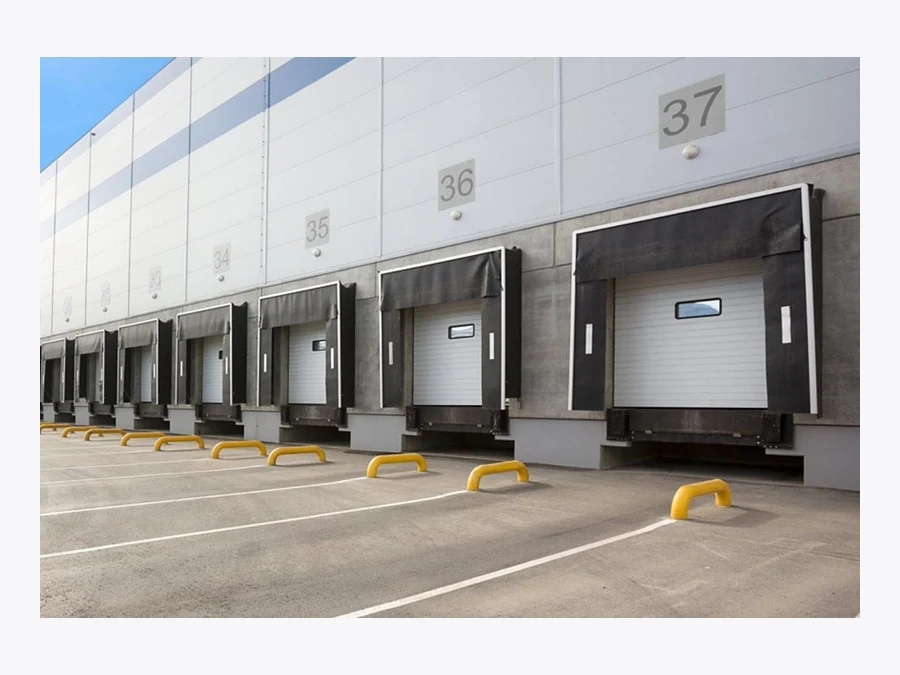
Gate · engineered system
Kathrein dock-door solution
Kathrein Solutions · Manufacturer website
Kathrein Solutions supplies the device family shown. Accessories, configuration and regional availability must be specified separately.
| Type | RFID reader/antenna system at a passage |
|---|---|
| Configuration | One or more readers in a frame or overhead |
| Capture | Tagged goods/containers passing the gate |
| Integration | Data passed to a central management system |
| Illustration | Supplier logistics/gate illustration, not a specific SKU |
Advantage
Designs capture around a warehouse transfer point and its shipment checks.
Trade-off
System engineering and business-event rules determine the result.
Candidate uses: Incoming/outgoing goods; material-flow verification
Check before ordering: Confirm passage geometry, tag placement, direction handling and WMS event mapping.
Published specifications checked 14 October 2026. Product photos can show a family or accessory configuration. Validate the selected setup with Raptool.
Kathrein forklift RFID solution · Forklift · mounted capture
Forklift · mounted capture
Kathrein forklift RFID solution
Kathrein Solutions · Manufacturer website
Kathrein Solutions supplies the device family shown. Accessories, configuration and regional availability must be specified separately.
| Type | Vehicle-mounted RFID solution; specify the complete system |
|---|---|
| Workflow | Identify labelled objects and detect a load |
| Location | Requires the applicable localisation coverage/system |
| Components | Reader, antennas, mounting, power and integration |
| Illustration | Supplier forklift application diagram |
Advantage
Moves identification into material handling and can remove dismount-and-scan steps.
Trade-off
Reader mounting, load isolation and location association need a tested design.
Candidate uses: Pallet movement; load-carrier tracking; internal logistics
Check before ordering: Pilot different loads, nearby pallets and safe cabling; confirm the hardware generation and location method.
Product page · Manufacturer specifications
Published specifications checked 14 October 2026. Product photos can show a family or accessory configuration. Validate the selected setup with Raptool.
SICK + Coppernic forklift system · Forklift · on-board RFID
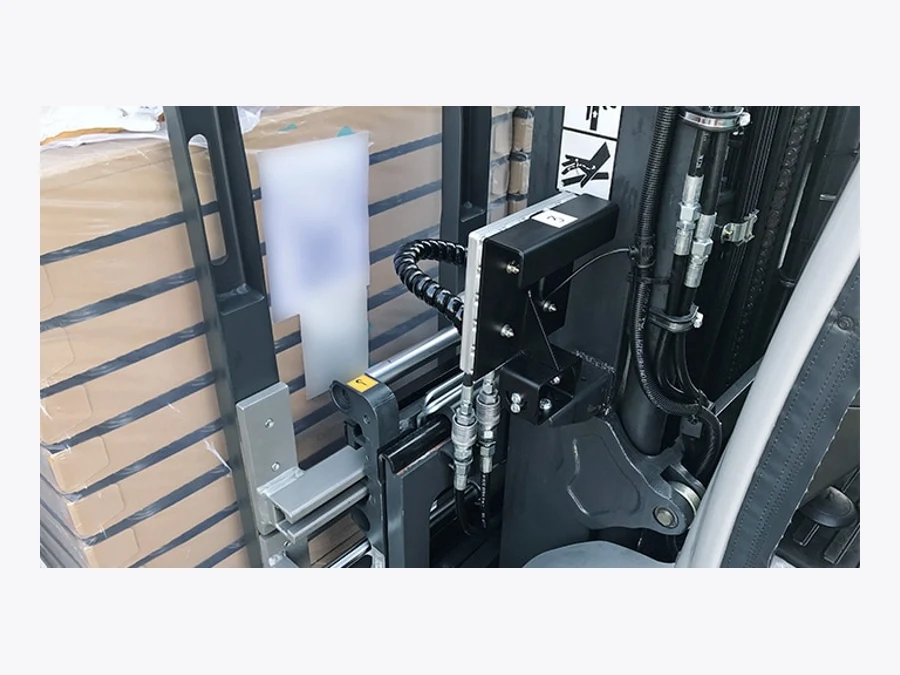
Forklift · on-board RFID
SICK + Coppernic forklift system
SICK / Coppernic · Manufacturer website
SICK / Coppernic supplies the device family shown. Accessories, configuration and regional availability must be specified separately.
| Reader | SICK RFU63x UHF read/write device in the published system |
|---|---|
| Antennas | Up to four external antennas on the forklift boom |
| Operator interface | Tablet with handling instructions |
| Identity | RFID transponder on each pallet |
| Photo | Published forklift system example |
Advantage
Places RFID identification and driver instructions on the truck during pallet handling.
Trade-off
A complete partner-built installation; reader, tablet, mounting and application need validation.
Candidate uses: Pallet handling; vehicle-based load identification
Check before ordering: Confirm current reader and partner solution availability; pilot actual loads, locations and safe mounting.
Published specifications checked 14 October 2026. Product photos can show a family or accessory configuration. Validate the selected setup with Raptool.
RFID warehouse questions answered
Is RFID faster than barcode scanning?
RFID can reduce individual handling by reading groups of compatible tags. The gain depends on the complete workflow, tag placement and exceptions. Fixed barcode automation can also suit some flows; compare equivalent systems.
How much warehouse time can RFID save?
Impinj’s 2019 Asset Recovery Specialists case reports 30 labor hours saved per week in a specific warehouse asset-tracking deployment. It does not establish a universal saving against barcode scanning.
How much money does the example save against barcode?
The illustrative weekly count assumes 10,000 units, six seconds per barcode item and two hours for the complete RFID count. At 52 counts and €30/hour, RFID frees €22,880/year of labor capacity. After assumed extra running costs of €3,600, the value is €19,280; cash savings require avoided paid costs.
Does a pallet RFID tag prove all cartons are present?
A pallet tag identifies the pallet. Verifying its contents requires an accurate maintained relationship between the pallet and the contained items, or individual item tagging and the appropriate checking workflow.
Can RFID readers be mounted on forklifts?
Yes. SICK/Coppernic and Kathrein publish forklift RFID examples. A vehicle installation includes reader, antennas, power, safe mounting, software and a validated method for identifying the load and its destination.
Will an RFID gate read every item perfectly?
Performance must be verified with the actual tags, loads and environment. Nearby stock, metals, liquids, tag orientation and passage direction can cause missed or unwanted reads. Configure exception checks before booking WMS transactions.
Do all listed readers work automatically with Raptool WMS?
The exact reader interface, middleware, ID mapping, filtering and warehouse transaction rules must be agreed with Raptool. Operating-system support does not certify every RFID gate or vehicle installation.